

What Is Silage Wrap? A Complete Guide to Silage Bale Wrapping
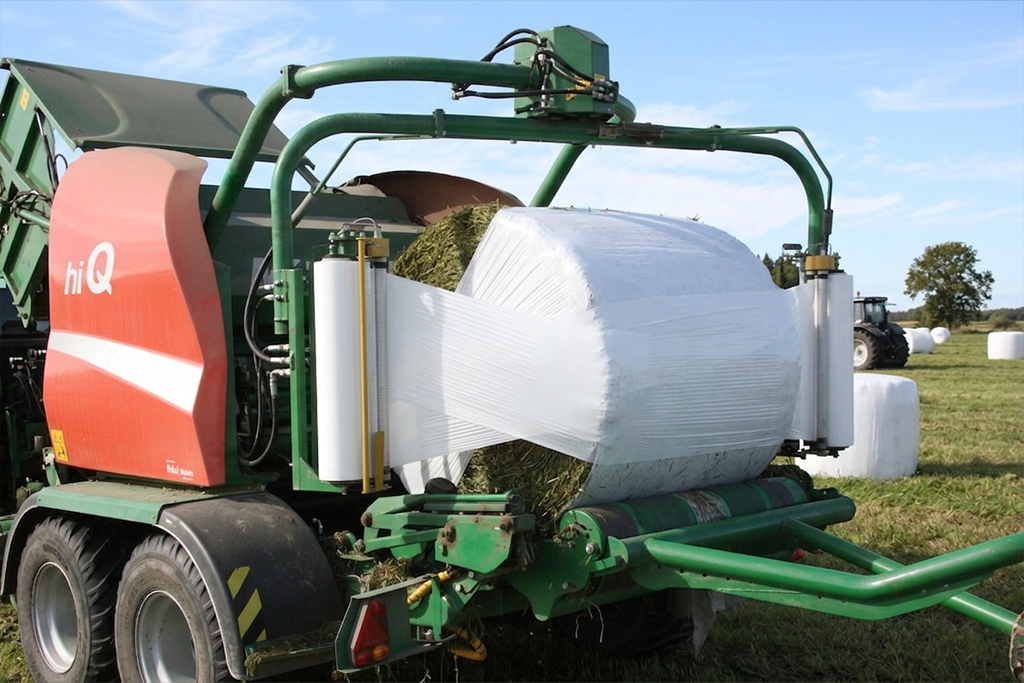
Silage wrap is a specialized agricultural stretch film used to wrap forage bales and create a sealed environment for fermentation and storage. Unlike ordinary plastic film or bale net wrap, silage wrap is designed to stretch tightly around a bale and limit oxygen exposure, helping farmers preserve the quality of grass, haylage, alfalfa, clover, maize silage, and other high-moisture forage.
For farmers, contractors, livestock operations, and agricultural distributors, choosing the right silage wrap can have a direct impact on bale protection, feed quality, storage life, and film consumption.
But what exactly is silage wrap, how does it work, and what should you consider when buying silage film?
This guide explains everything you need to know about silage bale wrap, from materials and wrapping layers to stretch, UV protection, puncture resistance, and bale storage.
What Is Silage Wrap?
Silage wrap is an agricultural-grade stretch film used to seal freshly baled forage and create the low-oxygen environment required for proper silage fermentation.
Most modern silage wrap is manufactured from polyethylene, commonly using LLDPE (Linear Low-Density Polyethylene) and multi-layer co-extrusion technology. The film is designed to combine flexibility, stretchability, adhesion, tear resistance, puncture resistance, and protection against outdoor conditions.
When the film is applied correctly around a bale, overlapping layers create a continuous protective barrier. This helps reduce oxygen and moisture exchange between the bale and the surrounding environment.
The result is a wrapped silage bale that can be stored outdoors while maintaining forage quality until it is needed for livestock feed.
In the agricultural industry, you may see several terms used for the same or closely related products, including:
- Silage wrap
- Silage film
- Silage stretch film
- Silage bale wrap
- Bale wrap
- Agricultural silage film
- Round bale silage wrap
- Bale wrapping film
Although the exact specifications can vary, all of these products are designed around the same basic goal: protecting fermented forage by creating a reliable barrier around the bale.
How Does Silage Wrap Work?
The main purpose of silage wrapping is to reduce oxygen exposure after the forage has been baled.
Freshly baled forage contains moisture and plant sugars. Once the bale is tightly wrapped, oxygen availability is greatly reduced. This allows the natural fermentation process to take place under anaerobic conditions.
A properly wrapped bale helps:
- Reduce oxygen entry
- Support controlled fermentation
- Reduce mold and spoilage risk
- Protect forage from rain and external moisture
- Reduce nutrient losses during storage
- Protect the bale from sunlight and UV exposure
- Maintain feed quality until the bale is opened
The quality of the final silage does not depend on the film alone. Bale density, crop moisture, wrapping speed, film stretch, overlap, number of layers, handling, and storage conditions all contribute to the final result.
That is why selecting the correct silage wrapping film and applying it correctly are equally important.
What Is Silage Wrap Made From?
Most agricultural silage wrap is made from polyethylene, particularly LLDPE because of its combination of flexibility, strength, stretchability, and film-forming properties.
High-quality silage film is generally produced using multiple layers. Different layers can be engineered to provide different functions, such as:
Stretch and flexibility
The film must stretch around the bale without breaking. Good stretch performance allows the film to conform closely to irregular bale surfaces.
Puncture and tear resistance
Grass stems, alfalfa stems, corn stalks, and other sharp crop material can create considerable stress during wrapping and handling. A strong film helps reduce accidental punctures and tears.
Adhesion and cling
Silage wrap needs sufficient tack to make overlapping film layers adhere to each other. Good adhesion helps create a continuous seal around the bale.
UV resistance
Wrapped bales are often stored outdoors for months. UV stabilizers help the film maintain its mechanical properties during exposure to sunlight.
Oxygen barrier performance
A major purpose of silage film is to limit oxygen transmission through the wrapped bale. Film construction, thickness, stretching, and the number of applied layers all influence the final barrier.
Silage Wrap Specifications and Parameters
| Specification | Details |
|---|---|
| Product Name | Silage Wrap |
| Material | LLDPE / MPE |
| Film Structure | 5-Layer Co-Extrusion Blown Film |
| Width | 250 / 500 / 750 mm / Customized |
| Length | 1500–2000 m / Customized |
| Thickness | 20–60 microns |
| Roll Weight | 1–50 kg |
| Lifespan | 6–24 months |
| Temperature Resistance | -30°C to 70°C |
| Color | White, Black, Green, Blue, Red, Yellow, etc. |
| Packaging | Carton / Customized Packaging |
| MOQ | Regular 500 kg; Special Specifications from 1 Ton |
| Application | Round Bale & Square Bale Wrapping |
Silage Wrap vs Bale Net Wrap: What Is the Difference?
Silage wrap and bale net wrap serve different purposes.
Bale net wrap is a mesh material primarily used to hold dry hay and straw bales together. It helps maintain bale shape during baling, handling, and transportation.
Silage wrap, on the other hand, is a solid stretch film designed to seal forage and restrict oxygen exposure.
For dry hay:
Bale net wrap → holds the bale together
For silage:
Silage wrap → seals the bale and supports fermentation
Depending on the baling system, net wrap may be used underneath the silage film, while some modern systems use bale wrapping film directly with compatible equipment.
It is therefore important not to treat silage plastic and bale net wrap as interchangeable products.

Why Is Silage Film Important for Silage Bales?
The purpose of making silage is not simply to store a bale. The goal is to preserve forage quality through controlled fermentation.
If too much oxygen enters a wrapped bale, undesirable aerobic microorganisms can become active, increasing the risk of heating, mold growth, dry matter loss, and deterioration.
A properly selected and applied silage film helps create the protective environment needed for successful storage.
For commercial livestock farms, this is particularly important because every spoiled bale represents wasted forage, labor, transportation, and production costs.
The cost of the film should therefore be evaluated together with:
- Film consumption per bale
- Bale protection
- Storage duration
- Puncture resistance
- UV resistance
- Film breakage rate
- Feed loss
- Labor efficiency
The cheapest roll of silage wrap is not necessarily the lowest-cost solution if it causes more breakage or requires excessive film consumption.
How Many Layers of Silage Wrap Are Needed?
The required number of layers depends on the film specification, bale type, crop characteristics, wrapping equipment, storage duration, and environmental conditions.
A common commercial approach is to use multiple overlapping layers rather than relying on a single layer of film.
For example, farmers may use four, six, or more layers depending on their requirements.
Four layers
Four layers may be suitable for certain standard wrapping conditions when the film, bale, equipment, and storage environment are well controlled.
Six layers
Six layers provide additional protection and are commonly considered when longer storage, rough forage, outdoor exposure, or increased puncture risk is involved.
More than six layers
Additional layers may be considered for particularly demanding conditions, but simply adding more film is not always the best solution. The correct balance between film quality, stretch, overlap, storage duration, and cost should be considered.
The actual recommendation should always follow the film manufacturer’s application specifications and the requirements of the wrapping machine.
What Is Pre-Stretch in Silage Wrap?
Pre-stretch refers to how much the silage film is stretched during application.
For example, if a film is designed to operate at a specific pre-stretch percentage, the bale wrapper applies tension to elongate the film before it reaches the bale.
Correct pre-stretch can help:
- Increase coverage from each roll
- Maintain consistent film tension
- Improve contact between overlapping layers
- Reduce unnecessary film consumption
- Allow the film to conform tightly to the bale
However, excessive stretching can reduce the effective thickness of the film and may increase the risk of film failure.
Different films are engineered for different pre-stretch ranges, so the wrapper should be adjusted according to the manufacturer’s recommended specifications rather than using the same setting for every film.
Why UV Resistance Matters in Silage Wrap
Many silage bales are stored outside for extended periods. This means the film must withstand exposure to sunlight, heat, rain, and changing weather conditions.
UV-resistant silage film is designed to slow degradation caused by ultraviolet radiation.
This is particularly important for farms in areas with strong sunlight or long storage periods.
When selecting silage wrap, buyers should consider:
- Expected storage duration
- Local UV intensity
- Average temperature
- Outdoor or covered storage
- Bale handling frequency
- Film UV stabilization specification
For demanding outdoor conditions, UV resistance should be treated as a key purchasing specification rather than an optional feature.
How to Choose the Right Silage Wrap
Choosing the right silage wrap requires more than comparing the price of one roll with another.
1. Check the film width
Common agricultural silage film widths include 500 mm and 750 mm, although other specifications are available depending on the wrapping system.
The correct width depends on the bale wrapper and the bale size.
2. Check film length
A longer roll may reduce the frequency of roll changes, but the number of bales per roll depends on bale size, film width, stretch, overlap, and number of layers.
3. Check film thickness
Thickness is usually expressed in microns (µm).
A thicker film may provide additional mechanical protection, but thickness alone does not determine overall performance. Film formulation, multi-layer structure, stretchability, and production quality also matter.
4. Check stretch performance
The film should be suitable for the pre-stretch system of your bale wrapper.
5. Check puncture resistance
If you are wrapping crops with stiff stems or rough surfaces, puncture resistance becomes particularly important.
6. Check UV protection
For outdoor storage, especially in high-UV climates, choose a film with an appropriate UV stabilization specification.
7. Check compatibility with your bale wrapper
Before ordering silage wrap for sale, confirm that the film dimensions and application specifications match your equipment.
This is especially important for contractors and commercial farms using high-speed or continuous bale wrapping systems.
How to Choose the Right Silage Wrap Specifications
| Buying Factor | Available Options | What Buyers Should Consider |
|---|---|---|
| Film Width | 250 / 500 / 750 mm / Customized | Match the film width with the bale wrapping machine and bale size. |
| Film Thickness | 20–60 microns | Choose according to bale handling, forage type, puncture risk, and storage requirements. |
| Film Length | 1500–2000 m / Customized | Longer rolls can help reduce roll changes during large-volume wrapping operations. |
| Roll Weight | 1–50 kg | Consider machine compatibility, handling requirements, and transportation efficiency. |
| Film Structure | 5-Layer Co-Extrusion | Multi-layer construction provides a balance of strength, flexibility, and durability. |
| Material | LLDPE / MPE | Suitable material selection helps provide flexibility, stretchability, and protection during bale wrapping. |
| UV Protection | High UV Protection | Important when wrapped bales are stored outdoors and exposed to sunlight. |
| Puncture & Tear Resistance | High Resistance | Helps reduce film damage during wrapping, handling, transportation, and storage. |
| Color | White, Black, Green, Blue, Red, Yellow, etc. | Select colors according to market preferences, branding, and application requirements. |
| Packaging | Carton / Customized | Customized packaging can support distributor, wholesale, and OEM requirements. |
| MOQ | Regular 500 kg; Special Specifications from 1 Ton | Suitable for distributors, agricultural suppliers, and bulk buyers. |
Round Bale Silage Wrap vs Square Bale Wrapping
Round bale silage wrap is widely used because round bales can be wrapped efficiently using individual or integrated bale wrapping systems.
However, square bales can also be wrapped using suitable silage film and compatible equipment.
The correct film configuration may differ according to:
- Bale dimensions
- Bale density
- Wrapper design
- Number of layers
- Film width
- Pre-stretch setting
- Storage conditions
For this reason, buyers should provide their bale size and wrapping machine information when selecting a commercial silage film.
Common Problems When Using Silage Wrap
Even high-quality film can fail if it is incorrectly applied.
Common problems include:
Film breaking during wrapping
This can be caused by excessive tension, incorrect pre-stretch, damaged roll edges, sharp crop material, or unsuitable film specifications.
Holes or punctures in the bale
Sharp stems, rough ground, animals, birds, machinery, and poor handling can damage the film.
Poor adhesion
Insufficient tack, incorrect film orientation, contamination, or unsuitable application conditions may reduce the effectiveness of overlapping layers.
Excessive film consumption
Incorrect stretch settings or excessive overlap can cause more film to be used per bale than necessary.
Bale spoilage
Bale spoilage can result from multiple factors, including inadequate wrapping, insufficient layers, holes in the film, poor bale density, unsuitable crop moisture, or prolonged exposure to damaging conditions.
For this reason, successful silage production should be treated as a complete process rather than simply a matter of buying plastic.
Silage Wrap for Farmers, Contractors and B2B Buyers
For commercial buyers, the most important question is often not simply “What is the price of silage wrap?”
Instead, buyers need to evaluate the total cost per bale.
A reliable supplier should be able to provide information about:
- Film width
- Film length
- Film thickness
- Roll weight
- Film color
- Number of layers
- Recommended pre-stretch
- UV resistance
- Puncture and tear resistance
- Packaging
- Private labeling
- Container loading
- MOQ
- Production capacity
For distributors and agricultural wholesalers, consistent specifications between batches are especially important.
A manufacturer that can provide stable quality, customized specifications, OEM packaging, and reliable export service can be more valuable than a supplier offering only a low initial roll price.
Conclusion: Choosing the Right Silage Wrap
So, what is silage wrap?
Silage wrap is a specialized agricultural stretch film designed to tightly seal forage bales and help protect them from oxygen, moisture, sunlight, and physical damage during storage.
The best silage wrap is not simply the thickest or cheapest film. The right product should match the crop, bale size, wrapping machine, storage period, climate, and handling conditions.
When comparing silage film, look beyond price and consider film structure, stretch performance, tack, puncture resistance, tear resistance, UV protection, and expected film consumption per bale.
For farmers and commercial agricultural buyers, selecting the correct silage bale wrap can help reduce spoilage, improve storage reliability, and protect the value of the forage throughout the storage period.
If you are looking for silage wrap in bulk, provide your required film width, length, thickness, bale size, wrapping machine, and destination market so the appropriate specification can be recommended.
Frequently Asked Questions About Silage Wrap
What is silage wrap used for?
Silage wrap is used to seal forage bales and reduce oxygen exposure during fermentation and storage. It helps protect silage from air, moisture, sunlight, and physical damage.
What is silage wrap made from?
Most agricultural silage wrap is made from polyethylene, commonly LLDPE. Modern silage films are often manufactured using multi-layer co-extrusion technology to combine stretch, strength, adhesion, and UV resistance.
Is silage wrap the same as bale net wrap?
No. Bale net wrap is a mesh material mainly used to hold dry hay or straw bales together. Silage wrap is a solid stretch film designed to seal forage bales and restrict oxygen exposure.
How many layers of silage wrap should I use?
The required number of layers depends on the film specification, bale type, crop, storage duration, climate, and wrapping equipment. Four or six layers are common application levels, but buyers should follow the film manufacturer’s recommendations.
What is round bale silage wrap?
Round bale silage wrap is agricultural stretch film specifically used to wrap round forage bales. It is designed to stretch around the bale and create overlapping protective layers.
What is the difference between silage wrap and silage film?
In most agricultural applications, the terms silage wrap and silage film refer to the same general product category: stretch film used to wrap and seal silage bales.
What type of plastic is silage wrap?
Silage wrap is generally made from agricultural-grade polyethylene, particularly LLDPE. The exact resin formulation and multi-layer structure vary between manufacturers.
How long does silage wrap last?
The service life depends on film quality, UV stabilization, storage conditions, climate, and physical damage. Outdoor storage in high-UV environments generally requires film with appropriate UV protection.
Can silage wrap be used for round bales?
Yes. Round bale silage wrapping is one of the most common applications for agricultural silage stretch film. The film width and specifications should match the bale wrapper and bale dimensions.
How do I choose a silage wrap supplier?
Compare suppliers based on film specifications, raw materials, stretch performance, UV resistance, puncture resistance, production consistency, MOQ, packaging, OEM capability, export experience, and total cost per bale rather than roll price alone.
Changzhou Xinhui Netting Co., Ltd. Professional silage wrap suppliers | OEM & Private Label | Factory Direct Pricing
📧 : sale1@xinhuibalenetwrap.com
🌐 : https://xinhuibalenetwrap.com
Request a Free Quote Today →
Supplying farms, co-operatives, and distributors across North America, Europe, Japan, Australia, and worldwide.


