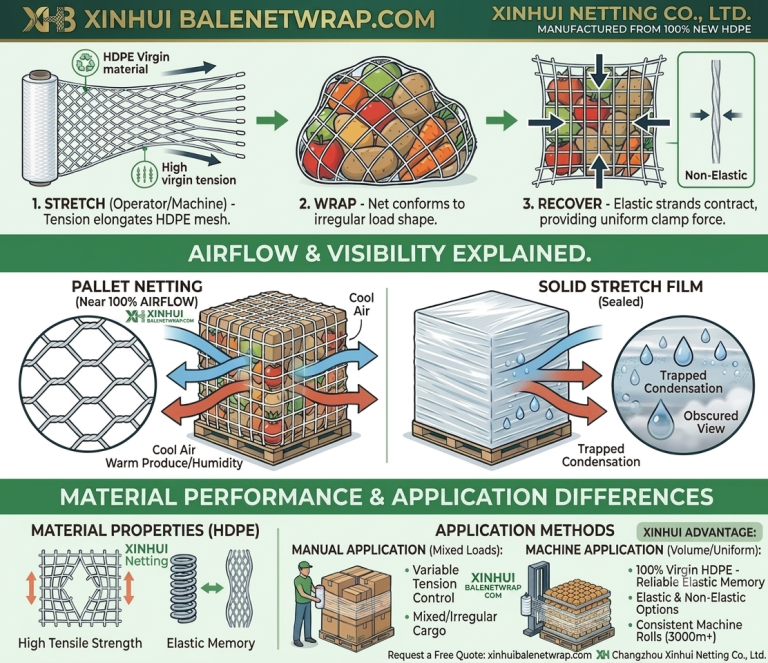
Baling the “Stubble of Death”: Protecting Your Net Wrap in Sharp Corn Stalk Fields
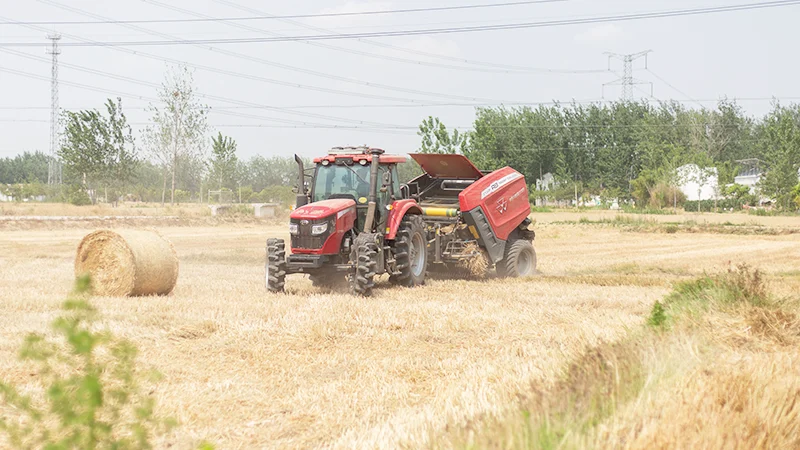
Introduction: The Field That Fights Back
Corn stalk baling looks straightforward on paper. The crop is already harvested, the stalks are lying there, and you just need to bale them up for bedding or roughage. In practice, corn stalk fields are one of the most punishing environments a round baler and its net wrap system will ever encounter.
The problem has a name among experienced operators: stubble of death. Those cut corn stalks — dried, hardened, and sharpened by the harvest process into something closer to wooden spikes than crop residue — sit upright in the field at exactly the wrong angle to do maximum damage to a round bale as it sits on the ground. The bale makes contact, the stubble punches through the net wrap, and what was a tight, well-wrapped bale begins to unravel from the outside in.
The consequences are immediate and expensive: scattered bales, wasted crop residue, lost time rewrapping, and net wrap consumption that can run two to three times higher than normal hay baling. On a large corn stalk operation, stubble-related net wrap failures can add up to a substantial seasonal cost.
This guide gives you a complete picture of why corn stalk fields are so destructive to net wrap, what you can do at every stage — field preparation, baler settings, net wrap selection, and bale handling — to minimize failures, and why net wrap specification matters more in corn stalk conditions than in almost any other baling environment.
Why Corn Stubble Is So Destructive to Net Wrap
Understanding the mechanism of failure is the first step to preventing it.
The Geometry of a Cut Corn Stalk
When a combine harvests corn, it cuts the stalk at a height of typically 6–18 inches above ground level, depending on the header height and field conditions. The cut end of the stalk is left exposed — and the cutting action of the combine header creates a sharp, angled cut face at the top of each remaining stalk.
Unlike grass stubble, which is relatively soft and bends under pressure, dried corn stalks are:
- Rigid — they do not flex or collapse under the weight of a bale
- Sharp — the cut end is angled and hardened by drying into something close to a wooden spike
- Dense — a typical corn field has 28,000–35,000 stalks per acre, meaning a bale sitting on the field surface is resting on hundreds of upward-pointing puncture points
- Hard — dried corn stalk tissue has a lignin content and hardness that can penetrate HDPE net wrap under the sustained pressure of bale weight
The Puncture Mechanism
When a round bale wrapped in net wrap is set down in a corn stubble field, the physics are straightforward and unforgiving:
- The bale makes contact with the stubble field surface
- The weight of the bale — typically 1,000–1,500 lbs for a corn stalk bale — concentrates pressure on the contact points between the bale and the upright stubble
- Individual corn stalks, unable to bend, act as load-bearing points and drive upward into the net wrap surface
- The net wrap — stretched tightly across the bale surface — is under tension at these contact points
- Under sustained pressure, the stalks puncture individual net wrap strands, opening gaps in the mesh
- Once gaps appear, the net wrap loses its structural integrity across the punctured area
- The bale begins to sag at the puncture zone, redistributing weight and accelerating the failure
The failure is often not immediate — it develops over hours or days as the bale sits in the field, with gradual puncture accumulation weakening the net wrap until the bale collapses.
Why the Problem Is Worse in Fall Conditions
Corn stalk baling almost always happens in fall — after grain harvest, when field conditions are at their most punishing for net wrap:
Stalks are fully dried and hardened Green corn stalks have some flex and give. By post-harvest fall conditions, the stalks have dried to maximum hardness. The cut ends are at their sharpest and most rigid.
Bales sit in the field longer Fall weather windows for moving bales are often unpredictable. Bales that sit in the field through rain, freeze-thaw cycles, or simply because equipment is busy elsewhere accumulate more stubble damage the longer they remain in contact with the field surface.
Harvest speed creates taller stubble Combines operating at high harvest speeds often run with slightly elevated header heights to maintain throughput — leaving taller stubble than ideal conditions would produce. Taller stubble means longer, more rigid spikes with more penetrating force.
The Real Cost of Net Wrap Failures in Corn Stalk Fields
Before getting to prevention, it helps to quantify what net wrap failure actually costs in a corn stalk operation — because the visible cost of a failed bale is only part of the picture.
Direct Costs
Additional net wrap consumption A bale that fails partially and must be rewrapped consumes a second application of net wrap. In severe failure cases, a bale may need to be completely re-baled. Net wrap consumption in problematic corn stalk fields can run 50–100% higher than the same operator’s hay baling.
Labor time Identifying failed bales, repositioning the baler, rewrapping, and moving compromised bales takes time that was not in the operating plan. In large corn stalk operations, this additional labor can be significant across the full baling season.
Crop residue loss A partially collapsed corn stalk bale loses density and begins to shed material. Residue that escapes the bale is effectively wasted — it was baled but cannot be fed or used for bedding in its scattered state.
Equipment wear Picking up and re-baling loose or partially collapsed bales puts additional wear on the baler’s pickup, feed rollers, and chamber components. This is a diffuse cost that shows up in maintenance bills rather than as a direct line item.
Indirect Costs
Field efficiency loss Stopping to assess, reposition, and rewrap failed bales breaks the rhythm of the baling operation. Time lost to failed bales is time not spent baling, compressing the weather window available for the full field.
Storage quality A corn stalk bale that suffered partial net wrap failure during field storage has a compromised outer layer by the time it reaches the barn or feed area. The structural integrity and density of the bale is reduced, affecting its usefulness for bedding or roughage.
Prevention Strategy: A Four-Stage Approach
Preventing corn stalk net wrap failures requires attention at four stages: field preparation, baler setup, net wrap selection, and bale handling after wrapping.
Stage 1: Field Preparation — Reducing the Threat at the Source
The most effective intervention happens before the baler even enters the field.
Stubble height management Work with your combine operator to minimize stubble height at harvest. Every inch of height reduction reduces the effective penetrating force of the remaining stalks. Target stubble height of 6 inches or less where field and header conditions allow. In practice, this means slowing harvest speed slightly to allow lower header operation — a trade-off that pays dividends at baling time.
Stalk chopping at harvest Many modern combines offer residue chopping systems that cut stalks into shorter segments and spread them across the field width. A field where the stalks have been chopped and spread presents a far less aggressive surface for bale contact than a field where intact stalks stand upright at full height. If your combine has a chopping option, using it for fields intended for stalk baling is a straightforward prevention measure.
Pre-baling conditioning pass In fields with particularly aggressive stubble, a conditioning pass before baling — using a rotary mower, flail chopper, or disk — cuts stubble down to a less damaging height and may also improve pickup efficiency for the baler. The additional pass adds time and fuel cost but can be worthwhile in fields where net wrap failure rates have been historically high.
Baling direction relative to combine rows In fields where stubble height is unavoidably tall, consider baling across the rows rather than along them. Cross-row baling means the bale contacts a more varied distribution of stubble heights rather than sitting consistently on the tallest cut stalks in a single row.
Stage 2: Baler Setup — Managing Contact and Tension
Once you’re in the field, baler setup choices affect how much stubble contact the completed bale experiences.
Bale diameter Larger bale diameters reduce the proportion of the bale circumference in contact with the field surface for a given stubble height. A 5-foot diameter bale presents a flatter contact curve at the ground than a 4-foot bale — meaning any given stubble stalk has less relative penetrating angle into the bale surface. Where your baler’s capacity allows, baling to maximum diameter in corn stalk conditions is beneficial.
Net wrap overlap and wrap count In corn stalk conditions, increasing the number of net wrap passes per bale — from the minimum setting to 3 or 3.5 wraps — provides additional net wrap layers at the bale surface. More layers mean more material for stubble to penetrate before structural failure occurs, effectively multiplying the resistance of the bale surface.
This comes at a cost in net wrap consumption per bale, but in conditions where a single-layer failure leads to full bale collapse and rewrapping, the additional half-wrap investment is clearly worthwhile.
Net wrap tension Correct net wrap tension during application is important in corn stalk conditions. Net wrap applied at too low a tension sits loosely on the bale surface, with less ability to distribute the point load of a stubble contact across adjacent mesh strands. Properly tensioned net wrap distributes point loads more effectively across the mesh, increasing resistance to puncture at any single contact point.
Check your baler’s net wrap tensioner setting and confirm it is at the manufacturer’s recommended specification for your net wrap weight.
Stage 3: Net Wrap Selection — This Is Where Specification Matters Most
Of all the prevention measures available, choosing the right net wrap specification for corn stalk conditions is the one that provides the most durable baseline protection — because it is in effect for every bale, in every field, regardless of field preparation or baler settings.
Net Weight: Go Heavier
This is the single most important specification choice for corn stalk baling.
Net wrap is measured in grams per square meter (g/m²). A heavier net weight means more HDPE material per unit of bale surface area — thicker individual strands, a denser weave, and greater resistance to puncture from below.
| Net Weight | Corn Stalk Suitability | Notes |
|---|---|---|
| 7 g/m² | Not recommended | Insufficient strand thickness for stubble resistance |
| 8 g/m² | Marginal | Acceptable in light stubble conditions only |
| 9 g/m² | Good | Minimum recommended for corn stalk baling |
| 10 g/m² | Better | Recommended for heavy or tall stubble |
| 12 g/m² | Best | Maximum protection for the most aggressive conditions |
Operators who have been running 8 g/m² net wrap for hay and are experiencing net wrap failures in corn stalk fields often find that moving to 9 or 10 g/m² resolves the problem without any other changes.
Material Quality: Virgin HDPE Is Non-Negotiable
In corn stalk conditions, the quality of the HDPE raw material in the net wrap is more important than in standard hay baling — because the failure mode (puncture under sustained load) is a direct test of the material’s mechanical properties.
Net wrap produced from 100% new (virgin) HDPE has consistent molecular weight distribution and predictable mechanical properties across the full roll. Its tensile strength, puncture resistance, and elongation characteristics are uniform — meaning every section of net wrap on the bale surface has the same capacity to resist stubble penetration.
Net wrap produced from recycled or mixed feedstocks may have inconsistent mechanical properties — areas of the roll with lower tensile strength or higher brittleness that are more susceptible to stubble puncture. In hay baling, this inconsistency may not cause noticeable problems. In corn stalk conditions, where the net wrap is under constant puncture stress, weak points in the material become failure points.
Weave Structure
Net wrap weave structure — the pattern and density of the mesh — affects how point loads from stubble contacts are distributed across the material. A tighter, more uniform weave distributes the load of a stubble contact point across more adjacent strands, increasing resistance to puncture at any single point.
When evaluating net wrap for corn stalk use, look for consistent, even weave structure across the roll. Irregular weave — visible as uneven mesh spacing or inconsistent strand thickness — indicates manufacturing quality control issues that will show up as inconsistent field performance.
Stage 4: Bale Handling After Wrapping — Reducing Field Contact Time
Even with optimal field preparation, baler settings, and net wrap specification, the longer a bale sits on a corn stubble field, the more cumulative stubble damage it accumulates. Post-wrapping bale handling is the final stage of the prevention strategy.
Move bales off the field promptly The most effective way to prevent accumulating stubble damage is to remove completed bales from the field as soon as practical after wrapping. Bales left overnight or over a weekend on a corn stubble field in dry fall conditions can accumulate significant net wrap damage even if they appeared perfectly wrapped when set down.
Use bale movers rather than tractor front loaders where possible Bale movers that lift bales clear of the field surface during transport avoid dragging bales across stubble — a common cause of net wrap tears on the bale sides that is separate from the puncture problem but adds to overall net wrap damage in corn stalk operations.
If using a front loader to move bales, approach from a direction that minimizes the distance the bale rolls or slides across the stubble surface.
Stage bales on non-stubble surfaces When moving bales to a storage row or staging area, position them on a surface that does not present the same puncture risk as the standing stubble field — a grass headland, a gravel pad, a concrete yard, or any surface where the bale contact points are less aggressive than cut corn stalks.
Inspect bales before storage Before stacking or storing corn stalk bales, inspect the net wrap condition on each bale — particularly the curved surface that was in contact with the field. Bales with visible net wrap damage should be used first or re-netted before storage to prevent further deterioration.
Troubleshooting: Common Corn Stalk Net Wrap Failure Patterns
Different failure patterns point to different root causes. Use this guide to identify what’s happening in your specific situation.
Pattern 1: Failure Concentrated at the Bottom of the Bale
What it looks like: Net wrap punctures and tears are concentrated on the lower curved surface of the bale — the section that was in contact with the field.
Most likely cause: Direct stubble puncture from below. The bale is sitting on upright stalks that are penetrating the net wrap under the weight of the bale.
Primary solutions: Higher net weight specification, field preparation to reduce stubble height, prompter bale removal from the field.
Pattern 2: Failure Concentrated at the Bale Ends
What it looks like: Net wrap tears or gaps appear at the flat ends of the bale rather than on the curved surface.
Most likely cause: Bale ends are less tightly wrapped than the curved surface and more susceptible to mechanical damage during bale movement — rolling, dragging, or tipping during transport and stacking. In corn stalk baling, this can also result from bale processor or pickup tines catching the net wrap edge.
Primary solutions: Increase wrap overlap at bale ends through baler settings, handle bales more carefully during transport, check pickup tine height and condition.
Pattern 3: Scattered Punctures Across the Full Bale Surface
What it looks like: Net wrap damage is distributed across the bale surface rather than concentrated at the bottom or ends.
Most likely cause: Bale was dragged or rolled across the stubble field surface during transport, or the bale rolled significantly before stopping after being set down. Also possible if particularly tall or irregular stubble is contacting the bale on multiple surfaces.
Primary solutions: Adjust bale placement procedure to minimize rolling distance after wrapping, use bale movers rather than loader pushing, check field for areas of unusually tall or irregular stubble.
Pattern 4: Net Wrap Failing at the Same Point on Every Bale
What it looks like: Failures consistently appear at the same location relative to where the net wrap begins or ends on the bale.
Most likely cause: This is typically a baler mechanical issue rather than a field issue — the net wrap feed system is creating a weak point at a consistent location. Check net wrap tensioner settings, feed roller condition, and knife cut quality.
Primary solutions: Inspect and adjust the net wrap system components, check knife sharpness, confirm tensioner is operating correctly.
Pattern 5: Net Wrap Tearing During Wrapping — Before the Bale Is Set Down
What it looks like: Net wrap breaks or tears during the wrapping cycle inside the baler, before the bale is even completed.
Most likely cause: Corn stalk material picked up during baling is getting into the net wrap feed path and creating resistance or sharp contact points that tear the net wrap during feeding. Also possible if net wrap quality is insufficient for the tension applied during baling of dense corn stalk material.
Primary solutions: Check baler net wrap feed path for corn stalk material, clean feed rollers and guides, consider upgrading net weight specification for corn stalk baling.
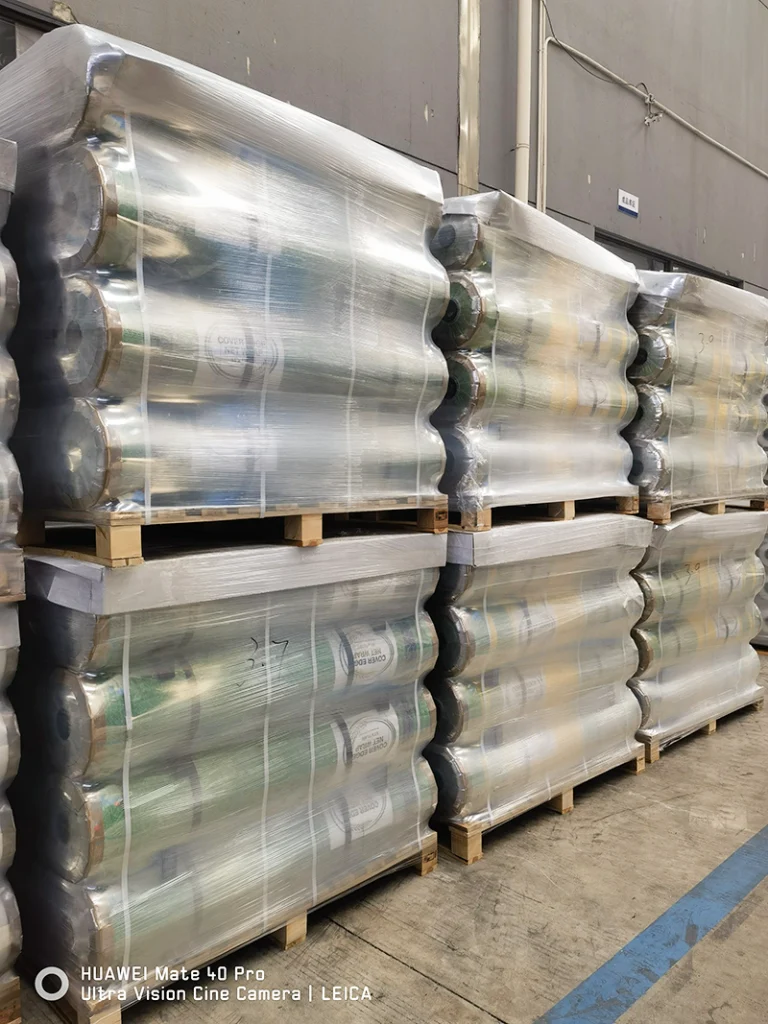
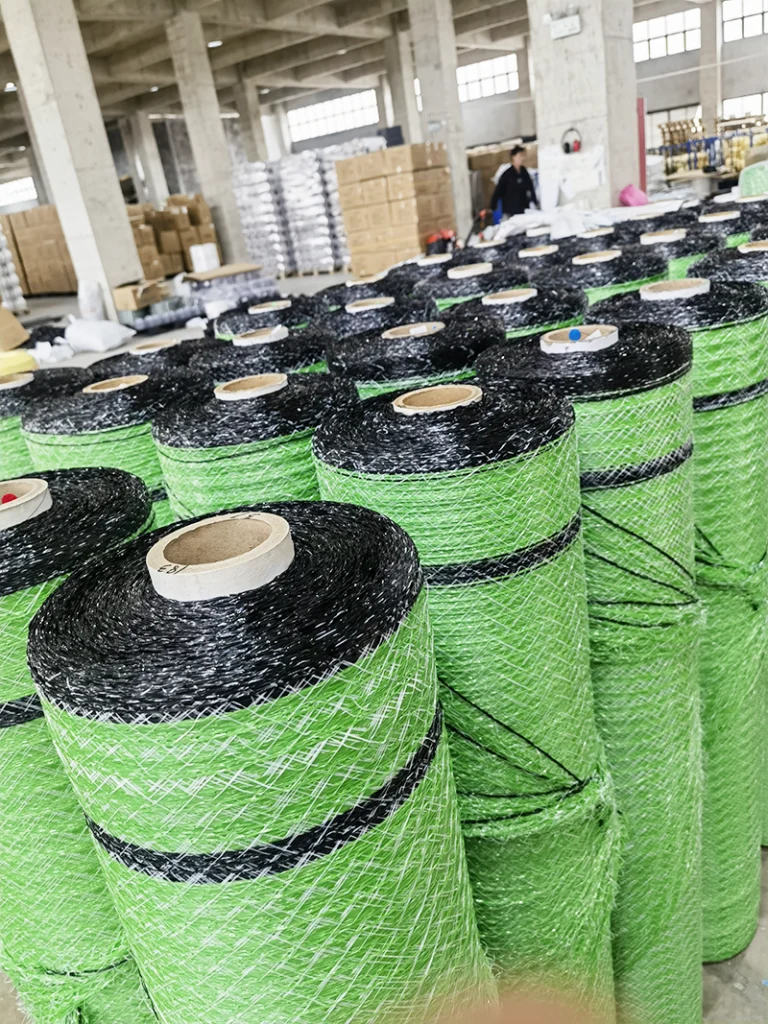
Changzhou Xinhui Netting Co., Ltd. — Net Wrap Specified for Corn Stalk Conditions
Changzhou Xinhui Netting Co., Ltd. is a professional net wrap manufacturer producing HDPE net wrap for agricultural markets worldwide, including operations in North America’s corn belt where stalk baling conditions are among the most demanding the product will face.
Our net wrap is manufactured from 100% new (virgin) HDPE with UV stabilizers — providing the consistent mechanical properties that corn stalk conditions demand. We produce in the heavier net weights that experienced corn stalk operators specify: 9, 10, and 12 g/m² are all standard production options, not special orders.
Recommended Specifications for Corn Stalk Baling
| Net Weight | Stubble Condition | Roll Size (NA) | Bales Per Roll* |
|---|---|---|---|
| 9 g/m² | Light to moderate stubble | 48″ × 3,000 m | 200–280 bales |
| 10 g/m² | Heavy or tall stubble | 48″ × 3,000 m | 200–280 bales |
| 12 g/m² | Extreme conditions / maximum protection | 48″ × 3,000 m | 200–280 bales |
*At 2.5–3.5 wraps per bale. Higher wrap counts in corn stalk conditions reduce bales per roll but improve puncture resistance.
Full Product Range
| Width | Length | Net Weight Options |
|---|---|---|
| 48″ (122 cm) | 3,000 m | 7 / 8 / 9 / 10 / 12 g/m² |
| 51″ (130 cm) | 3,000 m | 7 / 8 / 9 / 10 / 12 g/m² |
| 64″ (163 cm) | 2,134 m | 7 / 8 / 9 / 10 / 12 g/m² |
| 67″ (170 cm) | 2,134 m | 7 / 8 / 9 / 10 / 12 g/m² |
| 1.23 m | 2,000 m / 3,000 m | 7 / 8 / 9 / 10 / 12 g/m² |
| 1.25 m | 2,000 m / 3,000 m | 7 / 8 / 9 / 10 / 12 g/m² |
| 1.30 m | 3,600 m | 7 / 8 / 9 / 10 / 12 g/m² |
Custom specifications available — width, length, weight, and color on request.
Frequently Asked Questions
Q: Why does net wrap fail so much faster in corn stalk fields than in hay fields?
A: Corn stubble is fundamentally different from grass stubble. Dried corn stalks are rigid, dense, and sharpened by the combine cutting process into upward-pointing spikes that cannot flex under bale weight. A bale sitting on corn stubble rests on hundreds of these points simultaneously, with the full weight of the bale concentrating pressure at each contact point. In hay fields, the stubble is softer and more compliant — it bends rather than punctures. Corn stalk conditions are simply one of the most mechanically aggressive environments net wrap faces.
Q: What net wrap weight should I use for corn stalk baling?
A: The minimum recommended net weight for corn stalk baling is 9 g/m². For fields with heavy or tall stubble, or for operators who have experienced recurring net wrap failures at 8 g/m², moving to 10 g/m² is a practical step. The 12 g/m² option provides maximum puncture resistance for the most demanding conditions.
Q: Does stubble height really make that much difference to net wrap failure rates?
A: Yes — significantly. Taller stubble means longer stalks with more rigidity and a higher penetrating angle into the bale surface. Even a reduction from 12-inch to 6-inch stubble meaningfully reduces the puncture force each stalk can exert on the bale surface. Where combine header height can be managed to minimize stubble, it is one of the most cost-effective prevention measures available.
Q: Is it worth doing a pre-baling conditioning pass in corn stalk fields?
A: In fields with historically high net wrap failure rates, yes. The additional time and fuel cost of a conditioning or mowing pass to cut down stubble is typically recovered within the first season through reduced net wrap consumption and labor time spent dealing with failed bales. In fields with manageable stubble height and good stalk chopping at harvest, the conditioning pass may not be necessary.
Q: Can increasing the wrap count per bale compensate for lower net weight net wrap?
A: Partially, but not fully. Additional wraps increase the number of net wrap layers at the bale surface, improving overall puncture resistance. However, additional wraps of a light net wrap do not provide the same protection as the appropriate net weight for the conditions — and the additional net wrap consumption at higher wrap counts makes specifying the correct net weight a more economical solution overall.
Q: Should I use different net wrap for corn stalk baling versus hay baling?
A: Many operators in corn belt regions maintain separate net wrap inventory for corn stalk season — heavier weight for stalks, standard weight for hay. This is a practical approach that optimizes cost across different baling conditions. If managing two specifications adds complexity, specifying 9 g/m² as your single standard weight provides adequate performance across both hay and corn stalk applications.
Q: Does net wrap material quality matter for corn stalk resistance?
A: Yes, meaningfully. Net wrap from 100% virgin HDPE has consistent puncture resistance across the full roll. Lower-quality net wrap with inconsistent raw material may have areas of reduced mechanical strength that fail preferentially under stubble contact — even if the nominal weight specification is the same. In corn stalk conditions where puncture resistance is the critical performance parameter, raw material consistency matters more than in standard hay baling.
Q: What is the minimum order quantity from Changzhou Xinhui Netting?
A: Minimum order quantities depend on specification and destination. Contact us directly for a quote suited to your operation’s volume and requirements — we work with individual farms, co-operatives, and distributors.
Conclusion: Respect the Stubble, Specify Accordingly
Corn stalk baling is not hay baling with a different crop. The field environment is fundamentally more aggressive, the failure mode is different, and the net wrap specification that works for grass hay is often insufficient for the demands of a corn stubble field.
The operators who manage corn stalk net wrap failures effectively treat it as a system problem — addressing field preparation, baler settings, net wrap specification, and bale handling as a complete package rather than hoping a single fix will do the job. Among those four elements, net wrap specification is the one that provides the most consistent baseline protection — because it is working for every bale, all season, regardless of what else varies in the field.
For corn stalk conditions, that means 9 g/m² as a minimum, 10 g/m² for heavy stubble, and 12 g/m² for maximum protection — all manufactured from 100% virgin HDPE for the consistent mechanical properties that this demanding application requires.
Changzhou Xinhui Netting Co., Ltd. manufactures net wrap in these specifications, factory-direct to farms and distributors worldwide. If your current net wrap is losing the battle against corn stubble, contact us to discuss the right specification for your conditions.
Contact Changzhou Xinhui Netting Co., Ltd.
Changzhou Xinhui Netting Co., Ltd. Professional Net Wrap Manufacturer | OEM & Private Label | Factory Direct Pricing
📧 : sale1@xinhuibalenetwrap.com
🌐 : https://xinhuibalenetwrap.com
Request a Free Quote Today →
Supplying farms, co-operatives, and distributors across North America, Europe, Japan, Australia, and worldwide.