
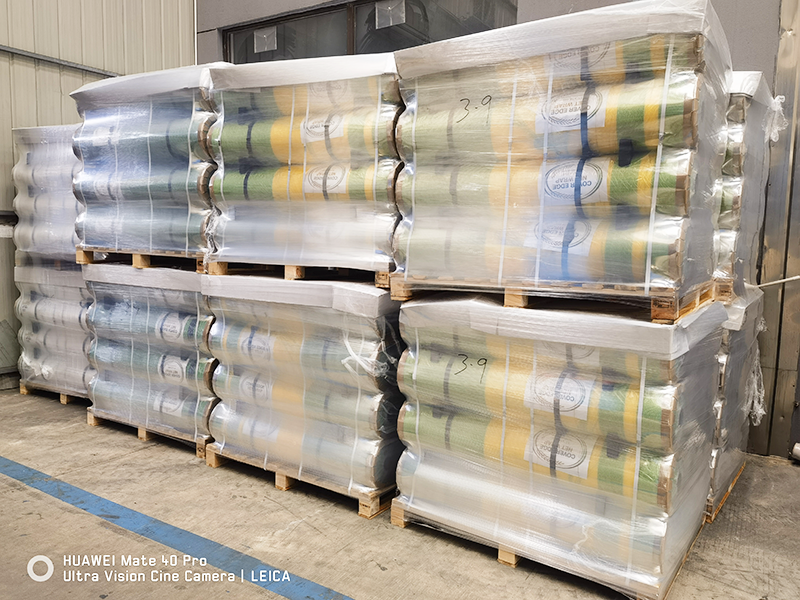
Private Labeling: How Large Farming Cooperatives Can Launch Their Own Net Wrap Brand
Introduction: The Margin You’re Currently Giving Away
Every net wrap roll your cooperative sells to members under a third-party brand contains a margin that belongs to someone else. The manufacturer built it. A distributor marked it up. A regional wholesaler marked it up again. Your cooperative bought it at the end of that chain and either passed that full cost to members or absorbed part of the margin to stay competitive — neither of which is the optimal outcome.
Large farming cooperatives are uniquely positioned to eliminate this margin stack entirely. You already have the member relationships. You already have the distribution infrastructure. You already have the purchasing volume that manufacturers require to produce to your specification. What you may not have is a manufacturing partner who can produce net wrap under your brand at the quality and scale your members expect.
That is exactly what private label net wrap manufacturing solves.
This guide explains the complete process of launching a cooperative-branded net wrap product — from the business case through specification, production, branding, and first-season supply — and introduces Changzhou Xinhui Netting Co., Ltd. as the OEM manufacturing partner with the production capability, quality standards, and supply chain experience to make it work.
The Business Case: Why Cooperatives Should Own Their Net Wrap Brand
Margin Recapture
The most straightforward argument for private label net wrap is margin recapture. When a cooperative sources net wrap under a third-party brand, every dollar of distribution margin in the supply chain is a dollar not available to the cooperative’s members — either as lower input prices or as cooperative returns.
A well-structured private label program eliminates the wholesale and distribution layers between the manufacturer and the cooperative’s supply chain. The cooperative buys at factory cost plus freight and import handling — not at wholesale cost, not at retail cost. The difference flows back to the program rather than to a chain of intermediaries.
For a cooperative purchasing 500 rolls per season at a conservative saving of $25 per roll versus equivalent branded product, the annual margin recapture is $12,500. At 1,000 rolls, it is $25,000. At 5,000 rolls — entirely achievable for a large regional cooperative — it exceeds $125,000 per year. These numbers compound across seasons and across the full range of agricultural inputs where private label programs can be applied.
Member Price Advantage
Margin recapture can be directed entirely to lower member pricing — passing the factory-direct cost advantage through to the farms and operations that are the cooperative’s reason for existing. In a competitive agricultural input market, being the source of meaningfully lower-priced net wrap builds member loyalty that branded retail alternatives cannot match.
A cooperative that supplies its own branded net wrap at 20–30% below the equivalent branded retail price creates a tangible, recurring demonstration of cooperative value for every member who buys net wrap every season.
Brand Equity and Member Identity
A cooperative-branded product is more than a margin play. It is a statement of organizational capability and member commitment. Members who see the cooperative’s name on a net wrap roll — a product they use every season, a product that works — are reminded every baling cycle that their cooperative delivers real, practical value.
Brand equity in agricultural cooperatives is built through consistent delivery of quality products and services. Private label net wrap — done well, with a quality manufacturing partner — is a concrete manifestation of that commitment.
Supply Chain Control
Third-party branded net wrap products are subject to availability, pricing, and specification decisions made by the brand owner — not by your cooperative. Price increases, specification changes, supply shortages, and minimum order adjustments are decisions you have no control over under a third-party brand relationship.
With a private label program, your cooperative controls the specification, the pricing, and the supply relationship. You decide the net weight, the roll length, the color, the packaging. You negotiate directly with the manufacturer. You are not subject to the commercial decisions of a brand whose interests may not align with your members’ interests.
Differentiation from Retail Competitors
Farm supply retail chains, online agricultural platforms, and competing cooperatives all supply the same branded net wrap products. Your cooperative’s private label is, by definition, exclusive to your cooperative — it cannot be purchased anywhere else. This exclusivity supports member retention and makes price comparison against external sources less direct.
Who Is This Model For?
Private label net wrap manufacturing is most appropriate for cooperatives and organizations that meet certain scale and operational thresholds. Honest assessment of fit before committing to a program saves everyone time.
Good Fit: Large Regional and National Cooperatives
Organizations with:
- Net wrap purchasing volume of 500+ rolls per season — sufficient to justify a dedicated production run and achieve meaningful per-roll cost savings
- Existing agricultural input distribution infrastructure — warehousing, logistics, and member supply relationships already in place
- Professional procurement function — staff capable of managing an international manufacturing relationship, import logistics, and quality assurance
- Multi-year planning horizon — private label programs deliver the greatest value when run consistently across seasons, not as a one-time purchase
Examples of cooperative types well-suited to this model: grain marketing cooperatives with agricultural input retail operations, regional farm supply cooperatives, national agricultural cooperative organizations, livestock producer cooperatives with feed and bedding input programs.
Possible Fit: Mid-Size Cooperatives and Agricultural Retailers
Organizations with:
- 200–500 rolls per season of net wrap purchasing
- Willingness to carry 1–2 seasons of inventory to achieve economical production run sizes
- Existing supplier relationships in Asia or willingness to develop them
- A specific member service or pricing gap that private label net wrap would address
For mid-size organizations, the economics are positive but require more careful management of inventory and cash flow. A phased approach — starting with a single specification and building volume before expanding the program — is often the right entry strategy.
Poor Fit: Small Cooperatives and Individual Farms
Private label manufacturing requires minimum production run quantities that are not economical for small-volume buyers. Organizations purchasing fewer than 100–200 rolls per season are better served by the factory-direct purchasing described elsewhere in our resources — the same quality, the same manufacturer pricing, but without the brand development overhead of a private label program.
The Private Label Process: From Decision to First Delivery
A cooperative that decides to launch a private label net wrap program works through a defined sequence of steps from initial specification through first seasonal supply. Here is the complete process as Changzhou Xinhui Netting Co., Ltd. structures it with cooperative clients.


Step 1: Specification Development (2–4 Weeks)
The first step is defining exactly what product your cooperative wants to put its name on. This involves decisions across every dimension of the net wrap specification:
Width selection Which widths do your members need? Most North American cooperatives begin with 48″ and 51″ as the two dominant commercial sizes serving the bulk of their membership. European cooperatives typically begin with 1.23 m and 1.25 m. Adding 64″ and 67″ for large-baler members expands the program’s coverage.
Starting with two widths is practical for a first-season program — it limits SKU complexity while serving the majority of members. Additional widths can be added in subsequent seasons.
Net weight selection Most cooperative programs begin with 8 g/m² as the standard offering — the weight that covers the broadest range of member applications. Adding a 9 g/m² or 10 g/m² heavy-duty option addresses members who bale alfalfa, silage, or corn stover where heavier specification adds value.
Roll length Standard 3,000 m for 48″ and 51″ widths. Standard 2,134 m (7,000 ft) for 64″ and 67″ widths. Custom lengths are possible for cooperatives with specific member needs.
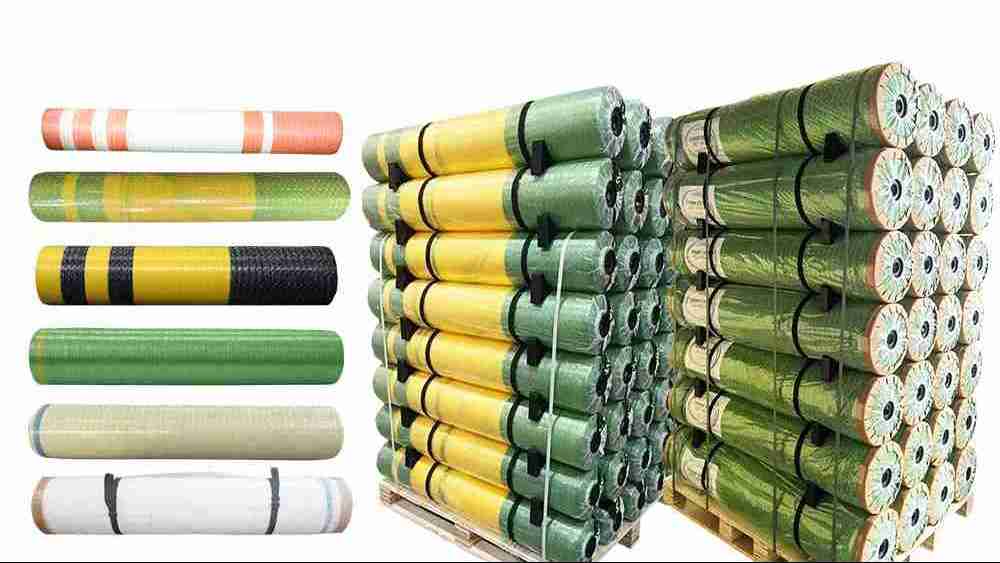
Color Net wrap color is one of the most visible elements of brand differentiation. Standard options are White, Green, Blue, and Yellow. Some cooperatives choose a distinctive color that associates with their brand identity — green for an environmentally positioned cooperative, blue for a brand that uses blue as its primary color. Custom colors are available on request.
Packaging and labeling Private label packaging defines how the product appears to members. Key decisions:
- Label design: cooperative logo, product name, specification details, contact information
- Label format: wrap-around label on roll, end-cap labels, or shrink sleeve
- Outer packaging: individual roll wrapping, pallet presentation, box quantities per pallet
- Required regulatory information: country of origin, material specifications, safety information
Core size Confirm 3-inch (76 mm) for all standard commercial baler sizes. If serving mini baler members, 2-inch (50 mm) narrow-width rolls may also be required.
Step 2: Sample Production and Approval (4–6 Weeks)
Before committing to a full production run, cooperative clients receive production samples for evaluation. This is a non-negotiable step in any serious private label manufacturing relationship — it confirms that the product meets specification before volume investment is made.
What the sample approval process covers:
- Dimensional confirmation: width, roll length, core dimensions
- Net weight verification: physical weighing and comparison against specification
- Material quality assessment: visual inspection of HDPE quality, UV stabilizer distribution, weave consistency
- Packaging review: label placement, print quality, information accuracy
- Feed test: ideally, sample rolls are tested in an actual baler of the relevant model to confirm feeding performance
Cooperatives with existing baler test equipment — or member relationships where a test can be arranged — should conduct a field test of sample rolls before production approval. This is the most complete quality validation available.
Written approval from the cooperative’s procurement representative should be obtained before production begins. This protects both parties and establishes the approved specification as the production reference.
Step 3: Production Run (4–8 Weeks After Approval)
With samples approved and purchase order confirmed, production begins. Production lead time for a standard private label net wrap run at Changzhou Xinhui Netting is typically 4–8 weeks depending on run size, current production schedule, and specification complexity.
During production, our quality control process covers:
Raw material verification HDPE resin batches are verified against specification before production begins. Only virgin HDPE meeting our raw material standards is used in production.
In-process quality checks Roll width, net weight, winding tension, and weave consistency are checked at defined intervals during production. Non-conforming material is rejected and not included in the delivery lot.
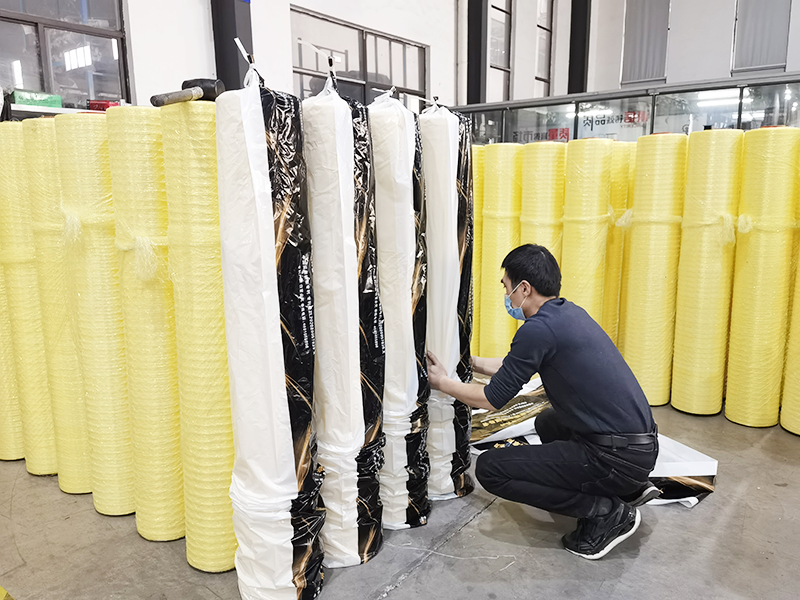
Label application Private label packaging is applied during production — either as roll labels applied at the winding stage or as post-production label application, depending on the packaging format agreed during specification.
Final inspection Completed rolls are inspected for dimensional compliance, label accuracy, and physical integrity before palletizing.
Documentation Production documentation — including material certificates, batch records, and quality inspection records — is provided with each shipment.
Step 4: Logistics and Import (6–12 Weeks from Production Completion)
Shipping net wrap from China to North America or Europe involves ocean freight, customs clearance, and domestic delivery. For cooperatives new to direct manufacturer sourcing, this logistics stage is often the least familiar part of the process.
Ocean freight Net wrap ships in standard 20-foot or 40-foot ocean freight containers. A 40-foot container typically holds:
- Approximately 800–1,100 rolls of standard 48″ net wrap depending on roll dimensions and palletization
- Proportionally fewer rolls of wider specifications
Your freight forwarder handles booking, documentation, and customs brokerage. Changzhou Xinhui Netting provides all export documentation required for clearance.
Transit time Ocean freight transit from China to US West Coast ports: approximately 14–21 days. To East Coast via Panama Canal: approximately 28–35 days. To European ports: approximately 25–35 days depending on routing.
Import duties and tariffs Import duty rates on agricultural net wrap vary by destination country and are subject to trade policy changes. Your freight forwarder or customs broker will advise on current applicable rates for your destination. Factor duty costs into your landed cost calculation when assessing program economics.
Domestic delivery From port to cooperative warehouse is managed through your domestic logistics provider. Xinhui Netting can recommend logistics partners with agricultural import experience if needed.
Total lead time planning From purchase order to warehouse receipt, cooperative programs should plan for 14–20 weeks for a first shipment. Subsequent orders can be planned on a shorter cycle once the relationship and logistics are established.
Step 5: First Season Launch
With inventory received and quality verified, the cooperative is ready to launch its branded net wrap to members.
Launch considerations:
Pricing strategy Set member pricing that reflects the program’s goals. Common approaches:
- Cost-plus pricing: factory cost + logistics + program overhead + cooperative margin
- Market-referenced pricing: price relative to the branded alternatives members currently buy, capturing part of the margin saving as cooperative return and passing part as member price advantage
- Member tier pricing: differential pricing for volume tiers that rewards high-volume member purchases
Member communication Introduce the private label product with clear communication about what it is, why the cooperative developed it, and what members can expect. Key messages:
- Equivalent specification to leading branded products
- Manufactured by an experienced OEM producer
- Exclusive to cooperative members
- Priced to deliver meaningful savings
Inventory management For a first season, conservative inventory planning is advisable. Forecast based on historical net wrap purchasing by members, add a reasonable buffer, and plan the reorder timeline to ensure second-season supply arrives before first-season stock depletes.
Specification Options: Building Your Product Range
A well-designed cooperative net wrap program does not need to cover every possible specification from day one. A focused initial range — two to three SKUs covering the majority of member needs — is easier to manage, requires less inventory investment, and is more straightforward to communicate to members.
Recommended Starting Range for North American Cooperatives
| SKU | Width | Length | Net Weight | Core | Primary Member Use |
|---|---|---|---|---|---|
| SKU 1 | 48″ (122 cm) | 3,000 m | 8 g/m² | 3″ | Standard hay and straw — widest member coverage |
| SKU 2 | 51″ (130 cm) | 3,000 m | 8 g/m² | 3″ | Mid-large baler members |
| SKU 3 | 48″ (122 cm) | 3,000 m | 9 g/m² | 3″ | Alfalfa / heavy-duty members |
This three-SKU starting range covers the majority of commercial round baler members in a typical North American cooperative with a manageable inventory footprint.
Expansion Options for Subsequent Seasons
Once the core program is established and running smoothly, additional SKUs can be added based on member feedback and purchasing data:
- 64″ and 67″ widths for large-baler members
- 10 g/m² or 12 g/m² for corn stover and silage applications
- European widths (1.23 m, 1.25 m) for cooperatives serving European-market members
- Narrow widths (75 cm, 90 cm) for cooperatives serving compact baler members
Quality Assurance: What You Need from a Manufacturing Partner
For a cooperative putting its name on a product, quality is not optional — it is the foundation of the entire program. A single season of quality problems with a private label product damages the cooperative’s credibility in ways that take seasons to repair.
The quality assurance framework that Changzhou Xinhui Netting operates under for private label clients includes:
Raw Material Standards
100% virgin HDPE — no recycled or mixed material. Virgin HDPE provides the consistent molecular weight distribution that translates to predictable mechanical properties: consistent tensile strength, elongation resistance, and UV performance across the full roll.
UV stabilizer loading — UV stabilizers are incorporated into the HDPE formulation at levels sufficient to maintain net wrap integrity through a full outdoor storage season in high-solar environments. The UV stabilizer content and distribution are part of our raw material specification and are not variable across production runs.
Production Standards
Dimensional precision — roll width is maintained within ±2 mm of specified dimension across the full roll length. Width variation outside this tolerance causes feeding problems in balers and is the most common source of end-user complaints about net wrap quality.
Consistent winding tension — rolls are wound at uniform tension throughout the full roll length. Inconsistent winding tension creates variable unwinding resistance that causes erratic net wrap feeding — a problem particularly visible in balers with mechanical tensioning systems.
Net weight accuracy — finished roll weight is verified against specification. Net weight variation affects tensile strength and performance consistency.
Documentation
For private label clients, Changzhou Xinhui Netting provides:
- Material certificates confirming HDPE grade and UV stabilizer specification
- Production batch records traceable to the roll level
- Quality inspection certificates for each production lot
- Country of origin documentation for import and customs purposes
Protecting Your Brand: Intellectual Property and Exclusivity
When a cooperative invests in developing a private label brand — including brand name, logo, label design, and associated brand identity — that investment needs to be protected.
Label and packaging ownership All label designs, artwork, and packaging developed by or for the cooperative remain the cooperative’s intellectual property. Changzhou Xinhui Netting does not use client label designs for any other client or purpose.
Brand exclusivity The cooperative’s brand identity is exclusive to the cooperative. We do not produce net wrap under the same brand name for any other buyer.
Non-disclosure Commercial terms, pricing, specifications, and the nature of the OEM relationship are treated as confidential and are not disclosed to third parties.
Trademark registration Cooperatives launching a new brand name for their net wrap program should consider trademark registration in their primary markets. This protects the brand name and associated imagery from use by competitors. Trademark registration is the cooperative’s responsibility — your legal counsel can advise on the appropriate registration strategy for your market.
Frequently Asked Questions
Q: What is the minimum order quantity for a private label net wrap program?
A: Minimum order quantities depend on specification and shipping destination. As a general guide, private label programs are most economical at 200+ rolls per production run — sufficient to fill a meaningful portion of a shipping container and achieve production efficiencies that support competitive per-roll pricing. Contact us with your volume and specification requirements for a specific minimum order discussion.
Q: How long does it take to get a private label program from decision to first delivery?
A: From initial specification discussion to first delivery at your warehouse, plan for 20–28 weeks for a first-time program. This covers specification development (2–4 weeks), sample production and approval (4–6 weeks), production (4–8 weeks), and ocean freight plus import clearance (6–12 weeks). Subsequent orders cycle faster once the relationship and logistics are established.
Q: Can we start with just one width and add others later?
A: Yes — and this is the recommended approach for first-time private label programs. Starting with a single width and net weight minimizes first-season inventory risk and management complexity. Additional widths and weights can be added in subsequent seasons based on member demand data from the first season.
Q: Do we need to handle label design ourselves?
A: You provide your cooperative’s brand identity — logo, colors, brand guidelines. We can work with your design or with a designer you designate to develop the label artwork for approval before production. Final label design approval rests with you before any production begins.
Q: What quality documentation do you provide?
A: For private label clients, we provide material certificates, production batch records, quality inspection certificates, and all export and country of origin documentation required for import clearance. Additional documentation requirements — such as those required for certified supply chain programs — can be discussed during specification development.
Q: Can we visit your factory before committing to a program?
A: Yes. Factory visits by prospective private label clients are welcome and encouraged. Seeing the production facility, meeting the team, and reviewing quality control processes in person is a legitimate and valuable part of due diligence for a significant supply chain commitment.
Q: What happens if a production run does not meet specification?
A: Non-conforming product is not shipped. If specification deviation is identified during production or final inspection, we notify the client, identify the root cause, and either correct within the production run or arrange replacement production. Our quality commitment to private label clients is the same as for our direct supply clients — the specification agreed at sample approval is the standard every production run is held to.
Q: Can you produce private label net wrap in colors specific to our cooperative’s brand?
A: Custom colors beyond our standard White, Green, Blue, and Yellow range are available for private label programs on request. Custom color matching requires a minimum production run quantity and may involve a color development lead time before full production. Discuss your color requirements during specification development.
Changzhou Xinhui Netting Co., Ltd. — Your OEM Manufacturing Partner
Changzhou Xinhui Netting Co., Ltd. is a professional net wrap manufacturer based in China with extensive OEM production experience supplying agricultural brands and cooperative organizations worldwide. We operate private label manufacturing programs for clients across North America, Europe, Japan, and other global markets — producing net wrap to client specification, under client branding, with the quality documentation and supply chain reliability that institutional clients require.
What We Bring to a Cooperative Private Label Program
Manufacturing capability Full net wrap production capability across all standard widths (50 cm to 1.70 m), net weights (7–12 g/m²), roll lengths (1,000–5,000 m), and core sizes (2-inch, 3-inch). No specification within our standard range requires special tooling or extended development lead time.
OEM experience We have produced net wrap under third-party brands for international agricultural markets. We understand the quality standards, documentation requirements, and supply chain expectations that institutional buyers and cooperative organizations require.
Quality infrastructure 100% virgin HDPE raw material, UV stabilization, consistent winding tension, dimensional precision, and full production documentation — the quality foundation that supports a cooperative putting its name on a product with confidence.
Flexibility Private label programs evolve. Member needs change. New widths are required. Specifications are refined. We work with cooperative clients on a long-term supply relationship basis — not as a one-time transaction — and we adapt as the program develops.
Communication English-language technical and commercial communication. Responsive to specification questions, sample requests, production status inquiries, and documentation needs. International supply chain relationships succeed or fail on communication quality, and we treat this as a core service responsibility.
Next Steps: Starting the Conversation
A private label net wrap program for your cooperative begins with a conversation about your organization’s needs, volume, and timeline. There is no commitment required to have that conversation — and the information it produces helps both parties assess whether the program is the right fit before any investment is made.
To begin, contact Changzhou Xinhui Netting with:
- Your cooperative’s annual net wrap purchasing volume (rolls per season, approximate)
- The widths your members primarily need (48″, 51″, European sizes, other)
- Your target timeline for first-season supply
- Any specific quality or documentation requirements relevant to your market or supply chain
We will respond with a preliminary program outline, indicative pricing, and a proposed next step toward specification development.
Contact Changzhou Xinhui Netting Co., Ltd.
Changzhou Xinhui Netting Co., Ltd. Professional Net Wrap Manufacturer | OEM & Private Label | Factory Direct Pricing
📧 : sale1@xinhuibalenetwrap.com
🌐 : https://xinhuibalenetwrap.com
Start the Private Label Conversation Today →
Supplying cooperative organizations, agricultural distributors, and private label clients across North America, Europe, Japan, Australia, and worldwide.


