

McHale Fusion 3 Baler-Wrapper: Why Net Wrap Specification Matters More on Combination Machines
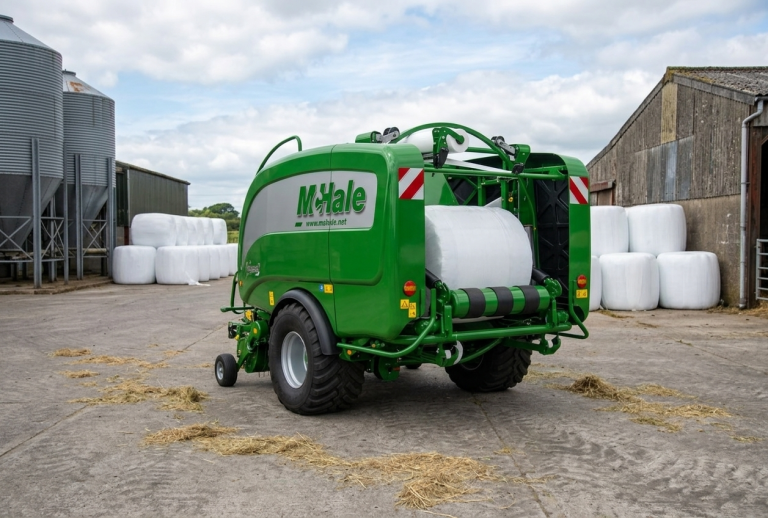
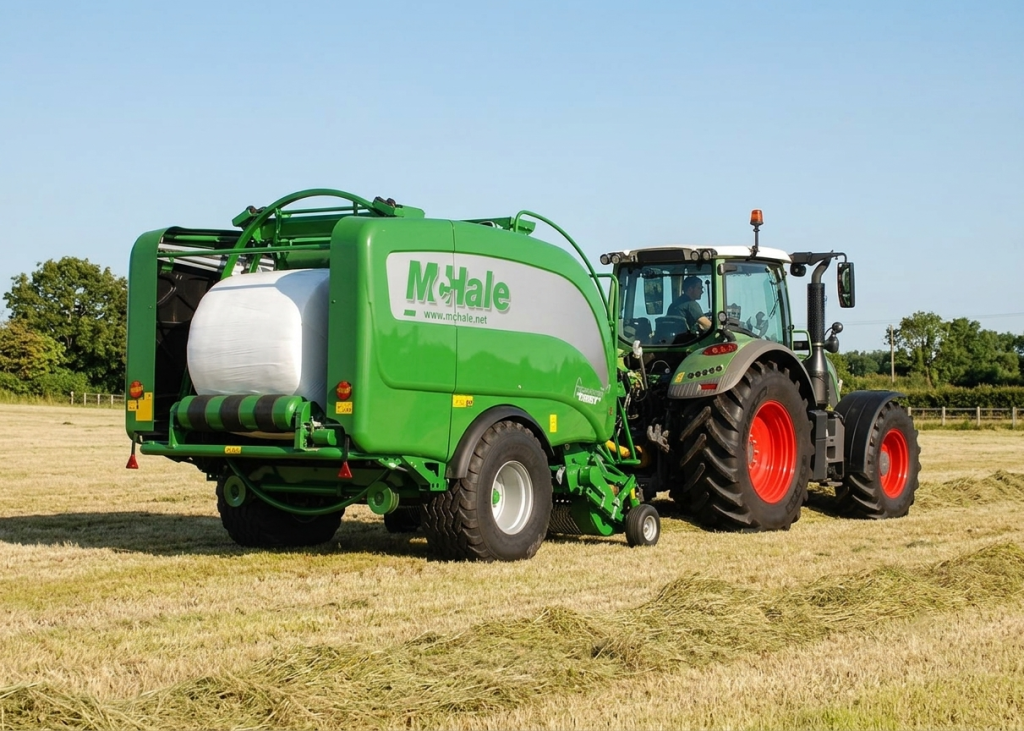
The McHale Fusion 3 is one of the most efficient baler-wrapper combination machines on the market — baling and wrapping in a single, continuous pass. That efficiency is exactly why net wrap specification matters more here than on a standalone round baler. On a combination machine, there’s no pause between baling and wrapping for an operator to catch a problem. A poorly specified net wrap doesn’t just produce a loose bale — it can stall the entire cycle, distort bale shape before film wrapping even begins, and compromise silage quality for months afterward.
If you operate a Fusion 3, or you’re sourcing bale net wrap for a combination baler-wrapper machine, understanding what actually matters in a net roll — beyond price per roll — will save downtime, wasted plastic, and spoiled feed. This guide covers the specifications that matter most, the failure patterns specific to combination machines, and a practical way to test a new net wrap supply before committing to a full season’s order.
Why Combination Machines Raise the Stakes
| Factor | Standalone Baler | Combination Machine (Fusion 3) |
|---|---|---|
| Time between baling and wrapping | Minutes to hours (operator can inspect) | Seconds — no inspection window |
| Impact of loose net tension | Noticed later, can be corrected | Carries directly into film-wrap stage |
| Cycle speed | Moderate | High-throughput, continuous |
| Typical bale type | Hay, straw | Frequently wet, high-moisture silage |
| Consequence of a net wrap breaking mid-cycle | Downtime to rethread | Full cycle stop, mid-bale interruption |
On a standalone baler, an operator often has time between the netting stage and stacking the bale to notice a problem and adjust settings before the next bale. On the Fusion 3, that buffer doesn’t exist — the same bale that receives loose or inconsistent net wrap moves directly into the film-wrapping chamber seconds later, which means the film is now sealing an already-compromised bale shape. This is the core reason net wrap specification carries more weight on combination machines than it does on a conventional baler.


Key Net Wrap Specifications for Combination Baler-Wrappers
| Specification | Recommended Range | Why It Matters on the Fusion 3 |
|---|---|---|
| Net weight (gauge) | 9–12 g/m² for silage; 8–10 g/m² for dry hay | Heavier gauge needed for wet, high-density bales |
| Net wrap tensile strength | Consistent across full roll length, not just sample sections | Prevents mid-cycle breaks that stop the combined bale-wrap cycle |
| Stretch & recovery | Stretches under load, returns close to original shape | Maintains bale roundness entering the film-wrap chamber |
| UV stabilization | Required — 100% virgin HDPE with UV additive | Protects bales sitting in yard/transport before or after wrapping |
| Roll width | Matched exactly to Fusion 3 chamber specification | Mismatch causes uneven edge coverage and net waste |
| Roll length | Up to 3000m / 9840ft | Reduces roll-change interruptions during high-throughput runs |
Reference specs based on standard bale net wrap manufacturing ranges (Xinhui Netting product data). Always confirm exact chamber width against your Fusion 3 operator manual.
Common Problems Caused by Wrong Net Wrap Specs on the Fusion 3
| Problem | Root Cause | Consequence |
|---|---|---|
| Net wrap breaking mid-cycle | Inconsistent tensile strength or poor roll storage | Machine stops mid-cycle, lost time |
| Bales out-of-round entering wrap chamber | Poor stretch-recovery in net wrap | Uneven film seal, silage spoilage risk |
| Moisture penetration under film | Loose knit density in net layer | Mold/spoilage inside sealed bale |
| Excessive net consumption | Low tensile net requiring extra wraps to compensate | Higher net cost per bale |
Of these, mid-cycle breaks are the most disruptive on a combination machine specifically because of how the Fusion 3’s workflow is designed. A standalone baler that experiences a net break simply stops the netting stage — you rethread and continue. On the Fusion 3, a break during the netting phase can interrupt the transfer into the wrap chamber, meaning the operator loses time on both stages of the process rather than just one.
Hands-On: How to Test a New Net Wrap Supply Before a Bulk Order
Switching net wrap suppliers, or receiving a new production batch, without testing it first is one of the most common ways operators end up with an unpleasant surprise mid-season. This simple field test takes under 30 minutes and can be done with a single roll before you commit to a full pallet or container order.
Step 1 — Check roll dimensions on arrival. Confirm the roll width matches your Fusion 3 chamber specification exactly, and weigh a sample length against the stated gauge (g/m²) to confirm it matches what was ordered. A roll that’s underweight for its stated gauge is a warning sign of inconsistent manufacturing.
Step 2 — Run a manual tension test. Unroll about a meter and pull firmly with both hands. The net should stretch slightly and largely recover its shape — not snap under light pressure, and not stay permanently stretched.
Step 3 — Load the roll and run a short test cycle. Bale and wrap 3–5 bales at your normal operating speed and density — ideally including at least one bale at the wetter, denser end of what you’d normally handle. Watch the net feed for hesitation, uneven tracking, or tension drop partway through the roll (a sign of inconsistent tensile strength within the same roll, not just between rolls).
Step 4 — Inspect the finished bales after the wrap cycle. Check that the net held the bale round and firm before the film layer was applied, with no visible slack or shifting under the film. Any looseness at this stage will only get worse, not better, once the bale is stacked or transported.
Step 5 — Let one test bale sit for 24–48 hours. Check that the bale shape holds and that there’s no sign of the film separating from an underlying loose net layer. This confirms the net wrap is doing its job as a structural base, not just passing the initial visual check.
Step 6 — Record the result against the batch number. If the roll performs well, note the supplier, batch, and specification so you can reorder the same specification with confidence. If problems appear, you’ve caught it on a handful of test bales instead of a full day’s silage run.
This test costs you a few bales and half an hour, but it’s far cheaper than discovering a tensile strength problem after 200 bales are already wrapped and stacked.
How to Choose the Right Net Wrap for a McHale Fusion 3
- Confirm roll width and diameter match your Fusion 3 chamber and net-brake specifications.
- Request tensile strength and stretch-recovery data from your supplier — not just a marketing claim.
- Match net weight (g/m²) to your typical bale type — heavier gauge for silage, standard gauge for dry hay/straw.
- Choose UV-stabilized, 100% virgin HDPE net wrap if bales may sit before film wrapping.
- Run the test-roll process above through a full cycle at normal operating speed before committing to bulk orders.
- Store rolls in a dry, temperature-stable area to preserve tensile properties until use.
Where Net Wrap Quality Comes From
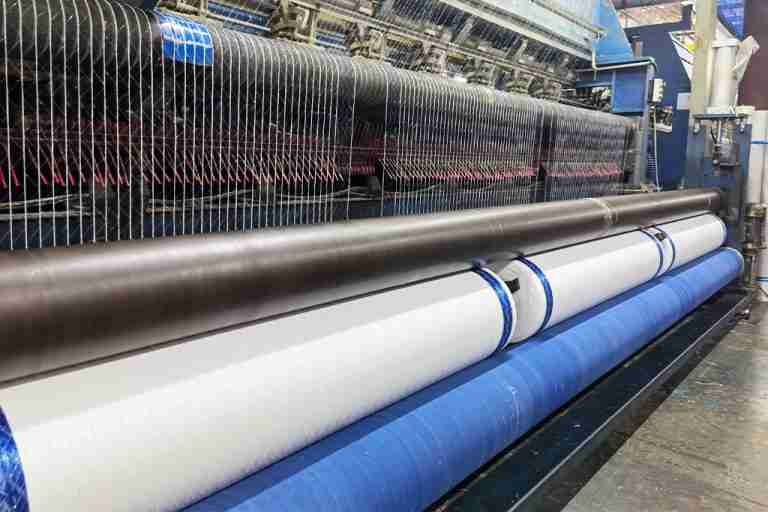
On a combination baler-wrapper, net wrap isn’t a minor consumable — it’s a structural component of the entire baling and wrapping process. Xinhui Netting manufactures bale net wrap from 100% virgin HDPE with UV stabilizers, in widths from 48″ to 67″, weights from 7 to 12 g/m², and roll lengths up to 3000m. Xinhui also produces biodegradable PBAT net wrap for operations with sustainability requirements — manufactured at a 25,000㎡ facility in Changzhou, China, and supplied to hay, straw, and silage producers across Europe, North America, South America, and Australia.
FAQ
Q: Why does net wrap quality matter more on a McHale Fusion 3 than on a standard baler?
A: Because the Fusion 3 bales and wraps in one continuous cycle, any inconsistency in net tension or strength carries directly into the film-wrapping stage, with no gap for an operator to catch or correct the issue beforehand.
Q: What causes net wrap to break mid-cycle on high-speed combination balers?
A: Mid-cycle breaks are most often caused by inconsistent tensile strength across the roll, improper storage that weakens the net, or a roll-width mismatch with the baler’s chamber specifications.
Q: What net wrap gauge is best for silage bales on a Fusion 3?
A: Silage bales generally need a heavier net wrap gauge, typically 9–12 g/m², along with strong stretch-recovery, since wet, dense forage puts more load on the net than dry hay or straw.
Q: Does UV-stabilized net wrap matter if the bale will be covered in plastic film afterward?
A: Yes — bales often sit in the yard or during transport before or briefly after wrapping, and UV-stabilized net wrap made from virgin HDPE helps prevent premature degradation of the underlying net layer during that window.
Q: How can I confirm net wrap is properly specified before ordering in bulk?
A: Request tensile strength and stretch-recovery test data from the manufacturer, confirm roll width matches your machine’s chamber, and run a small test batch through a full cycle at normal operating speed — including a 24–48 hour check on a finished bale — before ordering in bulk.
Q: Is biodegradable net wrap suitable for use on a McHale Fusion 3?
A: Biodegradable PBAT net wrap can be used on combination balers like the Fusion 3 for operations targeting sustainability goals, though tensile performance should be verified against your typical bale density and cycle speed before switching from standard HDPE net wrap.
Q: How many test bales should I run before trusting a new net wrap batch?
A: Running 3–5 test bales at your normal operating speed and density, including at least one at the wetter or denser end of your typical range, is usually enough to reveal tension or tensile strength issues before committing to a full field run.
Changzhou Xinhui Netting Co., Ltd. Professional Net Wrap Manufacturer | OEM & Private Label | Factory Direct Pricing
📧 : sale1@xinhuibalenetwrap.com
🌐 : https://xinhuibalenetwrap.com
Request a Free Quote Today →
Supplying farms, co-operatives, and distributors across North America, Europe, Japan, Australia, and worldwide.


