

The Rise of Hemp Baling: Why This “Super-Crop” Requires Specialized Netting Strength
Introduction: Hemp Is Not Hay
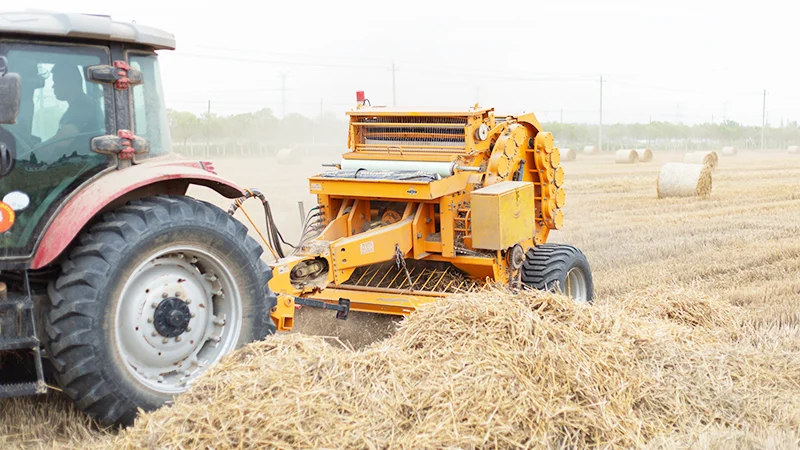
The global revival of industrial hemp cultivation has brought one of agriculture’s oldest fiber crops back into modern farming systems at scale. Across North America, Europe, Australia, and beyond, hemp acreage has expanded dramatically over the past decade as legislation opened markets for CBD, fiber, grain, and biomass applications. Where hemp grows, it eventually needs to be harvested — and for many operations, that means baling.
The problem that hemp growers discover quickly is that their round baler, their net wrap settings, and often their net wrap specification were designed with grass hay or straw in mind. Hemp is none of those things. It is a tall, dense, heavily stalked plant with extraordinary fiber strength, high green weight, and a physical structure that places demands on baling equipment and net wrap that grass hay simply does not.
Operators who bale hemp with standard hay settings and standard net wrap specification encounter a predictable set of problems: net wrap that tears during the wrapping cycle, bales that lose shape immediately after ejection, net wrap that cannot contain the expansion pressure of dense hemp material, and feeding failures that waste net wrap and time.
This guide explains why hemp baling is different, what it demands from net wrap specifically, and how to specify correctly for this increasingly important crop.
Industrial Hemp: Understanding the Plant You Are Baling
Before addressing net wrap specification, it helps to understand the physical characteristics of hemp that make it so challenging for baling systems designed for conventional crops.
Stem Structure: Extraordinarily Strong Fiber
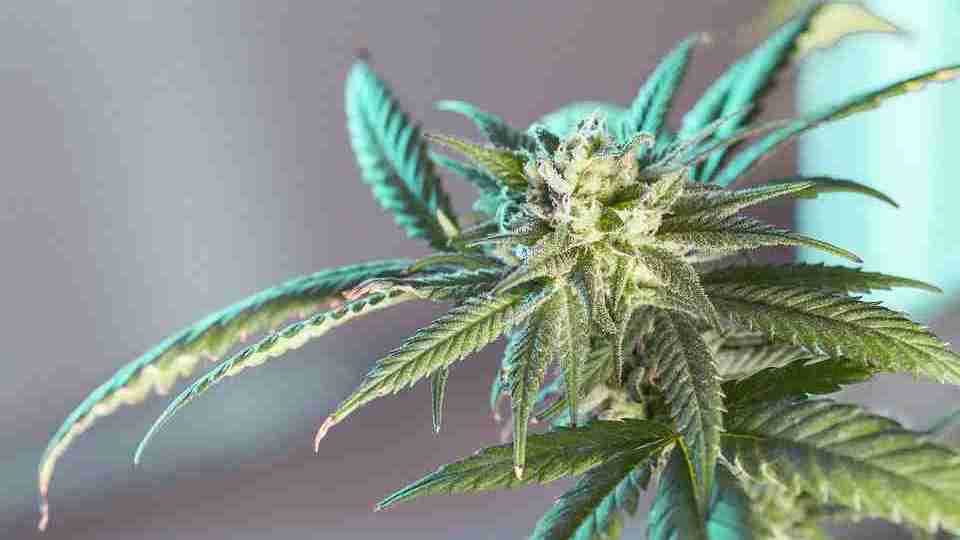
Hemp (Cannabis sativa L.) produces one of the strongest natural plant fibers known. The bast fibers that run along the outside of the hemp stalk have tensile properties that have been used historically for rope, sailcloth, and structural textiles — precisely because they are stronger per unit weight than most natural fibers.
Inside the bast fiber layer is the woody hemp hurd — a pith-like core material with significant bulk but lower structural strength than the fiber. Together, the bast fiber and hurd create a stalk that is:
- Structurally rigid when dry — significantly more so than grass stems
- Highly fibrous — the long, strong bast fibers interlock aggressively when compressed
- Springy under compression — hemp stalks store elastic energy under baler compression and release it as spring-back pressure against the net wrap after wrapping
Plant Height and Stalk Diameter
Industrial hemp grown for fiber or biomass typically reaches heights of 2–4 meters, with stalk diameters of 1–3 cm at the base. This is dramatically different from grass hay, where individual plant stems are millimeters in diameter and a meter or less in height.
The large stem diameter and height mean that cut hemp stalks — whether standing chopped or laid in windrows after mechanical cutting — are bulky, irregular in cross-section, and more resistant to compaction than grass material. They do not compress as readily, and they spring back more forcefully when compression is released.
Moisture Content at Harvest
Hemp is typically harvested for fiber at relatively low moisture content — ideally below 20% — when the bast fibers have partially retted and the stalk has begun to dry. However, hemp grown in wetter climates or harvested during unfavorable weather may have moisture contents significantly above this, creating the additional bale integrity challenges associated with high-moisture baling.
Hemp harvested at higher moisture content is heavier, denser in the bale, and more prone to bale deformation after wrapping — compounding the spring-back challenges of the dry material.
The Interlock Problem: Hemp Fiber as a Double-Edged Sword
Hemp’s extraordinary fiber strength creates a phenomenon in the bale chamber that experienced hemp balers describe vividly: the bale fights back. Unlike grass hay, where individual stems compress and nest together under baler pressure, hemp bast fibers interlock with each other and with adjacent stalks as the bale forms. This interlocking:
Builds bale chamber pressure rapidly — the bale reaches full chamber pressure faster than a comparable grass bale because the interlocked fiber structure resists compression more strongly.
Creates high spring-back pressure — when the bale leaves the chamber, the stored elastic energy in the compressed, interlocked fiber structure exerts sustained outward pressure against the net wrap. This pressure is significantly higher than in a grass hay bale of equivalent weight and size.
Produces irregular bale surfaces — hemp stalks do not compress into a smooth cylindrical surface the way grass stems do. The outer layer of a hemp bale has a more irregular, faceted surface with protruding stalk ends — each of which is a potential puncture point for the net wrap.
What Hemp Baling Does to Standard Net Wrap
Standard 8 g/m² net wrap designed for grass hay and straw baling is not sized for the forces that hemp baling creates. Here is what happens — and why.
Net Wrap Tearing During the Wrapping Cycle
The most immediately visible problem in hemp baling with standard net wrap is tearing during the wrapping cycle itself — before the bale even leaves the chamber.
As the bale rotates in the chamber during net wrap application, the irregular surface of the hemp bale presents the net wrap with a series of stalk ends and high-pressure contact points rather than the smooth, gradual contact of a grass bale surface. Each stalk end that protrudes from the bale surface creates a localized high-tension contact point between the bale and the net wrap.
On a grass hay bale, the smooth surface distributes net wrap tension evenly. On a hemp bale, the irregular surface creates concentration of tension at protruding stalk ends — locally exceeding the tensile strength of individual net wrap strands.
Standard 8 g/m² net wrap, with individual strands rated for loads appropriate for smooth-surface grass bale contact, can be broken at these concentration points during application — before the wrapping cycle is even complete.
Net Wrap Blowout After Ejection
Hemp bales that survive the wrapping cycle intact face a second challenge: the sustained spring-back pressure of the compressed fiber structure continues to act on the net wrap after the bale leaves the chamber.
In a grass hay bale, spring-back pressure is moderate and quickly reaches equilibrium as the outer bale layers relax slightly and the net wrap tension stabilizes. In a hemp bale, the elastic energy stored in compressed bast fibers and the interlocked stalk structure sustains higher outward pressure for longer — in some cases hours or days after baling.
Standard net wrap, designed for the moderate spring-back of grass baling, may be operating at or near its sustained load limit on a hemp bale. Over the first hours of storage, if the net wrap is marginally adequate, it stretches progressively as the sustained load exceeds its creep resistance — and bale shape deteriorates accordingly.
Surface Puncture from Stalk Ends
Hemp stalk ends — the cut cross-sections of stems — are woody, relatively sharp, and cylindrical. Stalk ends embedded in the outer layer of a hemp bale present the net wrap with repeated puncture-adjacent contacts as the bale rolls and settles after ejection.
The outer layer of a hemp bale is more aggressive toward net wrap from the inside than almost any other crop — including corn stover, which presents similar challenges. Standard net wrap weight provides less resistance to this internal surface contact than the denser weave and thicker strands of heavier-specification product.
The Net Wrap Specification for Hemp Baling
The challenges above point to a clear specification direction for hemp baling net wrap. Here is what the application demands.
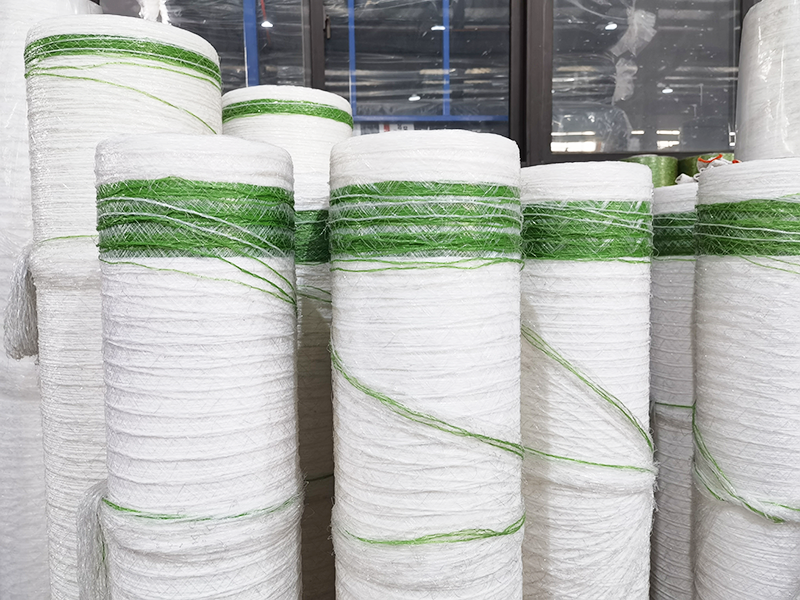
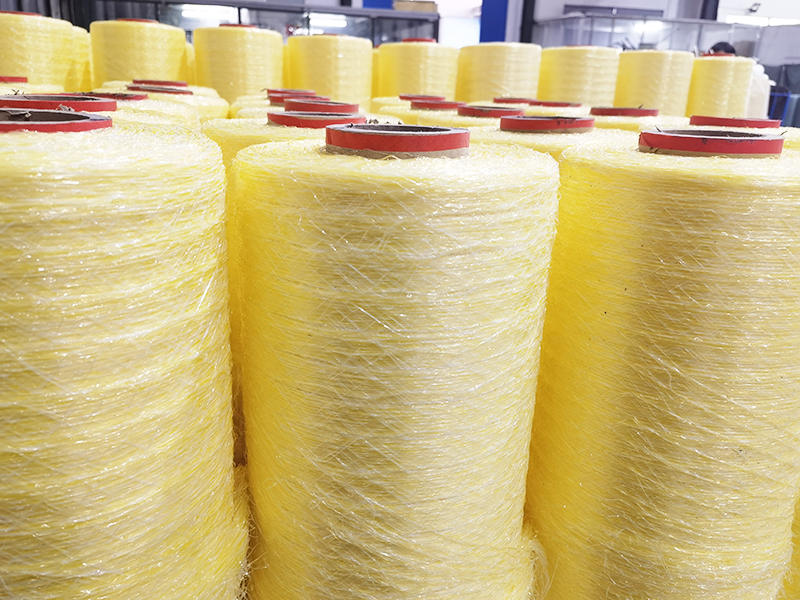
Net Weight: Start at 10 g/m², Consider 12 g/m²
For industrial hemp baling, 10 g/m² is the recommended minimum net wrap weight. The reasoning is straightforward:
Hemp’s higher spring-back pressure demands higher tensile capacity per wrap. The irregular surface of hemp bales creates higher localized tension at contact points, requiring more material per strand to withstand these concentrated loads. The sustained post-ejection pressure requires better creep resistance — more material per unit area.
For very dense fiber hemp, high-moisture hemp, or operations baling at high throughput where bale chamber pressure is consistently near maximum, 12 g/m² provides the maximum available margin against all three failure modes — mid-cycle tearing, post-ejection blowout, and surface puncture.
Operations that have been baling hemp at 8 g/m² and experiencing occasional failures should try 9 g/m² as an intermediate step. Operations with frequent failures at 8 g/m² should move directly to 10 g/m².
Wrap Count: 4 Wraps Minimum
For hemp baling, a minimum of 4 wraps per bale is strongly recommended — versus the 2.5–3 wraps that is standard for grass hay. The additional wraps provide:
More net wrap layers at the bale surface — each wrap adds a layer of tensile capacity, so 4 wraps of 10 g/m² provides substantially more total containment capacity than 3 wraps of 10 g/m² or 4 wraps of 8 g/m².
Redundancy against localized failure — if a stalk end creates a localized tension concentration that breaks one wrap’s strand at a specific point, the other three wraps’ strands at that point maintain bale integrity. Single-layer failure does not lead to bale collapse.
Better creep resistance over time — 4 layers of net wrap under sustained spring-back pressure deforms more slowly than 3 layers, maintaining bale shape through the critical first 24–48 hours after ejection when spring-back pressure is highest.
Tensile Strength: Ask for Data, Not Just Weight
As discussed in our article on the weight misconception in net wrap, g/m² does not directly measure tensile strength. For hemp baling specifically, tensile strength data — the force in Newtons required to break a strand or a defined width — is more directly relevant to performance than weight alone.
When sourcing net wrap for hemp baling, ask your supplier for tensile strength test results alongside the g/m² specification. For hemp, you want the highest tensile strength available at your chosen weight grade.
Material: Virgin HDPE Is Non-Negotiable
For hemp baling, the requirement for 100% virgin HDPE is stronger than for any other application discussed in this guide. Hemp’s combination of high surface aggression, high spring-back pressure, and potential for high-moisture application creates the most demanding mechanical conditions HDPE net wrap faces.
Recycled or mixed HDPE, with its variable molecular weight distribution and inconsistent mechanical properties, is more likely to fail at the localized stress concentrations that hemp bale surfaces create. A weak point in recycled material that would never cause a problem in grass hay baling becomes a failure initiation point in hemp baling.
Specify virgin HDPE explicitly and confirm it with your supplier before ordering for hemp applications.
UV Stabilization
Hemp baled for fiber is often stored outdoors for extended periods — the drying and retting process for fiber hemp benefits from field or open-shed storage. UV stabilization requirements for hemp bale storage are similar to other outdoor hay storage applications — climate-appropriate HALS loading as discussed in our UV stabilizer guide.
For hemp grown in high-UV regions (Australia, southern US, Mediterranean), premium UV stabilization is appropriate. For temperate regions, standard to performance-grade stabilization matches the storage period needs.
Baler Setup for Hemp: Beyond Net Wrap Specification
Net wrap specification is critical for hemp baling — but it works within a baler setup context that also needs to be optimized for this challenging crop.
Bale Chamber Pressure Settings
Hemp’s high fiber density and spring-back properties mean that bale chamber pressure settings appropriate for grass hay may not be appropriate for hemp. Operating considerations:
Variable-chamber balers: Hemp tends to build chamber pressure faster than grass hay. Monitor the bale formation closely — particularly for the first several bales when dialing in settings. Reduce forward speed to control the rate of material entering the chamber if chamber pressure is building too rapidly.
Fixed-chamber balers: Hemp’s bulk and fiber structure can create feeding challenges in fixed-chamber balers — the crop may bridge at the bale chamber entrance rather than feeding smoothly. Reduce forward speed and monitor for bridging, particularly with tall, standing hemp stalks.
Net Wrap Tension Setting
For hemp baling, net wrap tension should be at or slightly above your standard hay baseline — not reduced. Unlike high-friction crops such as barley straw where awn interlocking provides internal structural support and tension can be reduced, hemp’s spring-back pressure means the net wrap tension needs to actively contain the bale rather than complement internal structure.
Start at your standard hay baseline tension setting and increase by one step if bales are showing shape loss in the first hour after ejection.
Knife Condition
Hemp bast fibers are significantly stronger than grass stems — the same fibers that historically made hemp rope are now being asked to be cut by your baler’s net wrap knife. A dull knife that manages an adequate cut on grass stems will often produce ragged, incomplete cuts on hemp-laden net wrap because the hemp fiber reinforces the net wrap strands around the cut point.
Inspect and service the knife before beginning hemp baling operations, and plan for more frequent knife service intervals during hemp baling than during standard hay operations.
Pickup and Feeding Speed
Hemp’s bulk and stalk length can create pickup challenges. Key considerations:
- Windrow width should be matched to the baler’s pickup width — hemp windrows that overflow the pickup create irregular feeding and asymmetric bale density
- Forward speed should be reduced compared to grass hay to allow the pickup to handle the bulky material without overloading
- Ground clearance for the pickup may need adjustment — tall hemp windrows may require the pickup to be set slightly higher than for grass hay
Hemp Baling Applications: Different Crops, Different Priorities
“Hemp” covers a wide range of cultivation types with different harvesting priorities and baling challenges.
Fiber Hemp
Primary challenge: Maximum stalk length and fiber strength create the highest spring-back and surface aggression of any hemp type. Baled when dry for best fiber quality. Windrows are typically long-stemmed, dense, and bulky.
Net wrap priority: Maximum strength. 10–12 g/m², 4+ wraps, virgin HDPE.
CBD Hemp (Flower/Biomass)
Primary challenge: CBD hemp is typically harvested at higher moisture content than fiber hemp, as the flowers and leaves are the primary product. High moisture weight combined with dense, irregular material structure.
Net wrap priority: Strength and creep resistance. 10 g/m², 4 wraps, high-quality HALS for outdoor storage if bales are stored while material continues drying.
Hemp Grain
Primary challenge: After grain harvest, hemp straw residue needs management. Hemp straw is less challenging than full-plant fiber hemp but still more demanding than conventional grain straw.
Net wrap priority: 9–10 g/m², 3.5–4 wraps. Less demanding than full-plant hemp but still well above standard straw specification.
Hemp Biomass (Energy Crop)
Primary challenge: Hemp grown for biomass energy is typically harvested at scale with high-throughput equipment. Dense, whole-plant material at variable moisture.
Net wrap priority: 10 g/m², 4 wraps. Throughput pressure may mean less opportunity to adjust for individual bale conditions — robust specification provides insurance.
The Market Opportunity: Hemp Baling as a Distributor Opportunity
For net wrap distributors and agricultural retailers, the growth of hemp cultivation represents a specific market opportunity — one where the standard product range is genuinely insufficient and a specialized recommendation has real commercial value.
Hemp growers who have had negative experiences baling hemp with standard hay net wrap are receptive to a specific, informed recommendation that addresses their problem. A distributor who can say “here is what you need and here is why” — with a 10 g/m², 4-wrap recommendation backed by clear reasoning — builds a customer relationship that standard product retailers cannot.
The price point difference between standard 8 g/m² and premium 10–12 g/m² net wrap, combined with the higher wrap count requirement, means that hemp baling net wrap generates higher revenue per bale than standard applications. For distributors, this is a high-value niche within an overall growing market.
Key selling points for hemp-specific net wrap:
- Prevents costly mid-baling failures that waste time and net wrap
- Maintains bale integrity through the storage period — particularly important for fiber hemp where bale shape affects processing efficiency
- Reduces the frequency of rewrapping — a significant labor cost on hemp operations that experience frequent failures with standard specification
Changzhou Xinhui Netting Co., Ltd. — Net Wrap for Hemp Baling
Changzhou Xinhui Netting Co., Ltd. manufactures net wrap across the full weight range — including the 10 g/m² and 12 g/m² specifications that hemp baling demands — from 100% virgin HDPE with HALS-based UV stabilization.
Our heavier weight options are standard production lines — not special orders with extended lead times. For distributors and importers supplying markets where hemp cultivation is expanding, we can discuss volume supply arrangements and private label options for hemp-specific net wrap product lines.
Recommended Hemp Baling Specifications
| Application | Net Weight | Wrap Count | Width | Notes |
|---|---|---|---|---|
| Fiber hemp — dry | 10–12 g/m² | 4–5 wraps | Match baler spec | Maximum strength for dry fiber |
| CBD hemp — high moisture | 10 g/m² | 4 wraps | Match baler spec | Creep resistance critical |
| Hemp straw residue | 9–10 g/m² | 3.5–4 wraps | Match baler spec | Less demanding than full plant |
| Hemp biomass | 10 g/m² | 4 wraps | Match baler spec | Consistent throughput spec |
Full Product Range
| Width | Length | Net Weight | Core | Bales Per Roll (4 wraps)* |
|---|---|---|---|---|
| 48″ (122 cm) | 3,000 m | 7 / 8 / 9 / 10 / 12 g/m² | 3″ | 150–210 |
| 51″ (130 cm) | 3,000 m | 7 / 8 / 9 / 10 / 12 g/m² | 3″ | 150–210 |
| 64″ (163 cm) | 2,134 m | 7 / 8 / 9 / 10 / 12 g/m² | 3″ | 110–165 |
| 67″ (170 cm) | 2,134 m | 7 / 8 / 9 / 10 / 12 g/m² | 3″ | 110–165 |
| 1.23 m | 2,000 / 3,000 m | 7 / 8 / 9 / 10 / 12 g/m² | 3″ | 150–210 |
| 1.25 m | 2,000 / 3,000 m | 7 / 8 / 9 / 10 / 12 g/m² | 3″ | 150–210 |
At 4 wraps per bale. Bold indicates recommended for hemp baling.
Frequently Asked Questions
Q: Can I bale hemp with the same net wrap I use for hay?
A: You can attempt it — but standard 8 g/m² hay net wrap at 2.5–3 wraps is likely to produce problems with hemp. Mid-cycle tearing, bale shape loss after ejection, and surface damage from stalk ends are common outcomes. The minimum practical specification for hemp baling is 10 g/m² at 4 wraps from 100% virgin HDPE. Using standard hay net wrap for hemp is a false economy — the higher failure rate and rewrapping time cost more than the specification upgrade.
Q: What net wrap width do I need for hemp baling?
A: The same width as for any other crop on your baler — net wrap width is determined by your baler’s chamber width, not by the crop. If your baler requires 48″ net wrap for grass hay, it requires 48″ net wrap for hemp. Confirm the correct width in your operator’s manual.
Q: Does hemp baling damage the baler’s net wrap system?
A: Hemp’s aggressive surface and high bale pressure create more wear on net wrap system components than standard hay baling. The knife experiences more demanding cuts through hemp-reinforced net wrap; the feed rolls experience higher load; the bale chamber and tailgate experience higher ejection pressure. Plan for more frequent inspection and maintenance of net wrap system components during and after hemp baling seasons.
Q: Is there a specific baler model that handles hemp better than others?
A: High-capacity variable-chamber balers with robust net wrap systems generally handle hemp better than older or lighter-duty models, because their chamber can accommodate hemp’s density and their net wrap systems are designed for higher loads. The specific model matters less than ensuring the baler is in excellent mechanical condition before hemp baling begins — hemp amplifies any existing mechanical weakness.
Q: What is the right moisture content for baling hemp?
A: For fiber hemp, below 20% moisture is the recommended target for baling — lower moisture reduces bale weight, reduces fermentation risk during storage, and improves handling. For CBD hemp and biomass, target moisture depends on the downstream processing requirement. Hemp baled above 25% moisture should be treated as high-moisture silage in terms of net wrap specification — 10 g/m² minimum, 4 wraps.
Q: Is biodegradable net wrap available for hemp baling?
A: Biodegradable net wrap is an active area of development, including for hemp applications where the environmental credentials of the crop make sustainable baling inputs particularly relevant. Contact us for current availability and performance characteristics of our biodegradable product range — noting that biodegradable net wrap specifications for hemp applications should be discussed carefully given hemp’s demanding baling conditions.
Q: What is the minimum order from Changzhou Xinhui Netting?
A: Minimum order quantities depend on specification and destination. Contact us directly — we work with individual hemp farms, agricultural retailers supplying the hemp sector, and distributors building hemp-specific product lines.
Conclusion: Hemp Demands a Hemp-Specific Approach
Industrial hemp is not a difficult crop to bale — if you approach it with the right equipment settings and the right net wrap specification. The mistakes happen when growers assume that what works for grass hay will work for hemp, and discover at the cost of torn net wrap, collapsed bales, and lost crop that hemp’s extraordinary fiber strength translates directly into extraordinary demands on the net wrap system.
The specification is straightforward: 10 g/m² minimum, 4 wraps minimum, 100% virgin HDPE, from a manufacturer who can confirm tensile strength data alongside the weight specification. Within that specification, the net wrap system handles hemp reliably — and the growing hemp market becomes a net wrap purchasing opportunity rather than a net wrap failure story.
Changzhou Xinhui Netting Co., Ltd. manufactures the heavier-specification net wrap that hemp baling requires, in 10 and 12 g/m² as standard production lines, from 100% virgin HDPE — factory-direct to hemp operations and distributors worldwide.
Contact Changzhou Xinhui Netting Co., Ltd.
Changzhou Xinhui Netting Co., Ltd. Professional Net Wrap Manufacturer | OEM & Private Label | Factory Direct Pricing
📧 : sale1@xinhuibalenetwrap.com
🌐 : https://xinhuibalenetwrap.com
Request Hemp Baling Net Wrap Quote →
Supplying farms, co-operatives, and distributors across North America, Europe, Japan, Australia, and worldwide.


