
The Frozen Silage Survival Guide: Removing Icy Net Wrap Without Leaving Plastic in the TMR
Introduction: The Problem That Keeps Northern Cattle Producers Up at Night
It’s February. The temperature is -20°C. You’re feeding out silage bales and the net wrap is frozen solid into the outer layers of the bale — bonded to the forage like a second skin. You try to pull it free. It tears. Fragments stay behind. Some go into the bale processor. Some end up in the TMR mixer. And somewhere in that mixer, invisible shreds of HDPE net wrap are about to be fed to your cows.
For cattle producers in Canada, the northern US, Scandinavia, and other cold-climate regions, this is not a hypothetical scenario. It is a recurring winter management problem with real consequences for herd health — and one that the agricultural industry does not talk about loudly enough.
Plastic contamination in ruminant feed is a real animal health concern. HDPE fragments ingested by cattle do not digest. They accumulate in the rumen and reticulum over time, gradually reducing feed intake and digestive efficiency. The fragments are invisible in a loaded TMR mixer and impossible to remove once blended.
This guide gives you a complete, practical protocol for removing frozen net wrap from silage bales in winter — cleanly and completely — along with the equipment considerations and net wrap quality factors that determine how difficult or easy that job is going to be on your farm.
Why Frozen Net Wrap Is a Different Problem
Removing net wrap from a silage bale in summer or fall is relatively straightforward. The net wrap is pliable, it peels away from the bale face cleanly, and any remaining strands are visible and easy to pull free before the bale goes into the processor.
In winter, everything changes.
What Happens to Net Wrap at Sub-Zero Temperatures
HDPE becomes brittle in extreme cold. High-Density Polyethylene — the material all agricultural net wrap is made from — transitions from flexible to increasingly brittle as temperatures drop. At -10°C to -20°C and below, net wrap that would peel away in one piece in warmer conditions instead snaps, shatters, and fragments under tension. Pulling a frozen net wrap strand doesn’t stretch it — it breaks it, often into small pieces that scatter into the bale face.
Ice bonds net wrap to forage. Moisture from the silage fermentation process, combined with freezing temperatures, creates an ice bond between the net wrap mesh and the outer bale layers. The net wrap is not just draped over the bale — it is frozen into it. Attempting to pull it free without breaking this bond first invariably leaves net strands embedded in the outer forage layer.
Fermentation gases create internal pressure. Actively fermenting silage bales continue to produce CO₂ even in cold weather. This internal pressure can cause the outer bale layers to shift and refreeze in ways that embed net wrap strands more deeply into the forage surface than they would be on a dry hay bale.
Visibility is reduced. White or light-colored net wrap against pale frozen silage is difficult to see. In low-light conditions — early morning feeding, artificial lighting in feed alleys — small net wrap fragments against a light forage background can be nearly invisible to the person pulling bales.
The Real Risk: What HDPE Fragments Do in Cattle
Before the practical protocol, it is worth being explicit about why this problem demands a systematic approach rather than a casual “I’ll try to get most of it” attitude.
Rumen and Reticulum Accumulation
HDPE net wrap fragments ingested by cattle are non-digestible. They pass into the rumen and reticulum where, unlike sharp metal objects that cause classic hardware disease, plastic fragments do not trigger a strong immediate clinical response. Instead they accumulate silently over multiple feeding events — gradually building up in the forestomachs.
Chronic Digestive Impairment
Accumulated plastic in the rumen creates a physical mass that:
- Reduces effective rumen capacity
- Interferes with the normal stratification of rumen contents
- Impairs rumen motility and the mixing action of rumination
- Reduces dry matter intake as rumen fill signals are triggered earlier
- Can reduce milk production in dairy cattle through reduced feed efficiency
Performance Impact Over Time
In significant accumulations, plastic debris in the reticulum may contribute to vague digestive symptoms — reduced appetite, decreased milk production, mild signs of discomfort — that can be difficult to attribute to a specific cause, making the connection to feed contamination easy to overlook.
The Management Dimension
In many markets, plastic contamination of animal feed is a food safety and regulatory concern. Dairy operations selling into premium or certified supply chains face additional scrutiny around feed contamination. Beyond compliance, chronic low-level contamination that quietly reduces feed efficiency and milk output has a real but invisible cost to the operation — one that never appears as a single line item but accumulates across the full feeding season.
The Protocol: Removing Frozen Net Wrap Completely
The following protocol is designed for cold-climate cattle operations feeding silage bales in winter conditions. It addresses the problem systematically — from pre-feeding preparation through bale processing — to eliminate net wrap fragments from the TMR before they reach the mixer.
Stage 1: Pre-Warming (Where Possible)
The single most effective intervention for reducing frozen net wrap fragmentation is to warm the bale before attempting net wrap removal.
Option A: Indoor staging area If your operation has a covered feed preparation area, barn, or equipment shed, stage bales for 2–4 hours in an above-freezing environment before feeding. Even raising the bale temperature from -20°C to -2°C significantly reduces HDPE brittleness and softens the ice bond between net wrap and forage.
You do not need to fully thaw the bale — just enough surface warming to restore some pliability to the net wrap before removal.
Option B: Bale staging near heat sources In operations without dedicated staging space, positioning bales near a building wall, under a heat lamp, or in a position that receives direct morning sunlight for an hour before feeding can provide meaningful surface warming.
Option C: Warm water application Applying a small amount of warm (not hot) water to the net wrap surface breaks the ice bond between the net and the forage without requiring the bale to warm through. A garden sprayer with warm water, applied to the bale surface 10–15 minutes before net wrap removal, is effective at freeing frozen net wrap strands from the forage face.
This is particularly useful in severe cold (-25°C and below) where even brief outdoor staging does not meaningfully raise bale temperature.
Stage 2: Net Wrap Removal — The Correct Technique
Tools required:
- A sharp, dedicated net wrap cutting knife or hook knife
- Heavy work gloves (for grip and hand protection)
- A clearly designated collection container for removed net wrap
Step 1: Cut before pulling
Never attempt to simply pull frozen net wrap free from a cold bale without cutting first. Pulling induces tension that fragments brittle HDPE.
Use a hook knife or sharp utility knife to make two clean longitudinal cuts along the length of the bale — one on each side, roughly 180 degrees apart — from one bale face to the other. These cuts divide the net wrap into two halves that can be peeled away with less tension than attempting to remove the net as a single piece.
Step 2: Peel at a low angle
When peeling net wrap sections free, work at a low angle to the bale surface — close to parallel rather than pulling outward at 90 degrees. A low-angle peel applies tension along the ice bond rather than against it, releasing the net wrap more cleanly with less fragmentation.
Work slowly and deliberately. Speed is the enemy of clean net wrap removal in cold conditions.
Step 3: Inspect each section as you remove it
As each section of net wrap comes free, hold it up and inspect it for tears, missing sections, or areas that came away in fragments rather than as a continuous piece. A section that tears during removal tells you that fragments remain on the bale face — and those fragments must be found before the bale goes into the processor.
Step 4: Check the bale face
After removing the main net wrap sections, visually inspect the entire bale face carefully — particularly the outer 2–4 inches of forage where frozen net wrap fragments are most likely to be embedded. In low-light conditions, use a flashlight to check the surface.
Manually pull or scrape away any visible net wrap strands or fragments from the bale face. This takes 30–60 seconds but is the critical last check before the bale enters the processor.
Step 5: Collect all net wrap immediately
Place all removed net wrap — including fragments — directly into a covered collection container. Do not place removed net wrap on the ground near the bale or feed area where it can be picked up by wind, livestock, or equipment and re-enter the feed stream.
A dedicated net wrap collection bin with a lid, positioned within arm’s reach of the bale processing area, is a simple infrastructure investment that pays for itself by preventing re-contamination.
Stage 3: Bale Processor Management
Even with careful manual net wrap removal, a bale processor provides a final opportunity to intercept any remaining fragments before they reach the mixer.
Slow the processor on the first pass
The first rotation of a bale in the processor is when any remaining net wrap fragments are most likely to be expelled. Running the processor slowly on the initial pass gives the operator time to observe and intercept net wrap material before it is incorporated into the processed forage.
Install a net wrap catch tray if available
Some bale processors are available with optional net wrap catch trays or guards designed to intercept net wrap before it enters the processed forage stream. If your processor offers this accessory, it is worth the investment for cold-climate winter feeding operations.
Never operate the processor unattended during net wrap removal
The bale processor stage is not the time to walk away and do other jobs. An operator present during processing can observe and stop the machine if net wrap is detected in the forage stream before it reaches the mixer.
Stage 4: TMR Mixer Pre-Load Inspection
Before loading processed forage into the TMR mixer, conduct a quick visual inspection of the processed material for net wrap fragments.
This is most practical when loading directly into a stationary mixer — spread the processed forage in the loader bucket and scan it before tipping into the mixer. In operations with a conveyor system between the processor and mixer, this step may not be possible, making the earlier stages more critical.
If net wrap fragments are found in the processed forage: Do not load the contaminated material into the mixer. Set it aside, manually remove the visible fragments, and conduct a second inspection before using the forage. In severe contamination events, the safest course is to discard the outer layer of processed forage and use only the inner core material.
Stage 5: Record and Review
Track net wrap removal incidents
Keep a simple log of bales where net wrap removal was difficult, where fragmentation occurred, or where fragments were found in processed forage. Over time, this log will reveal patterns — particular net wrap brands or roll sources that are more prone to cold-weather fragmentation, particular temperature thresholds where your current protocol breaks down, or particular bale types that are more challenging.
Review your net wrap specification
If cold-weather net wrap fragmentation is a recurring problem on your operation, the net wrap specification itself may be a contributing factor. See the section below on net wrap quality and cold-weather performance.
Net Wrap Quality and Cold-Weather Performance
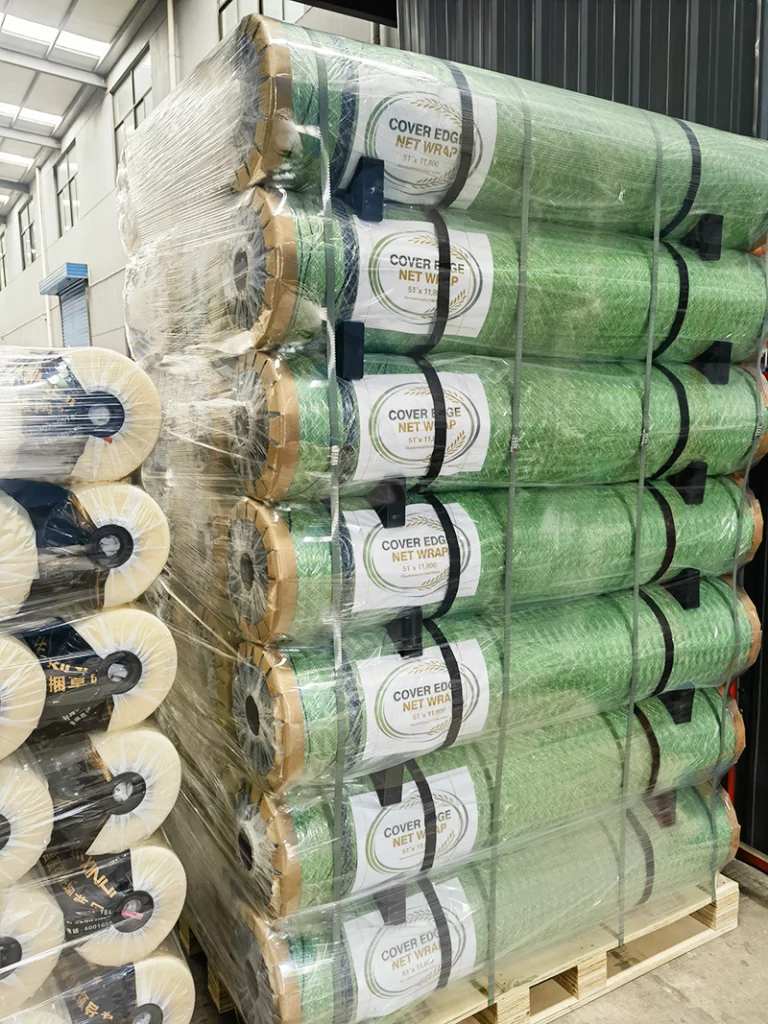
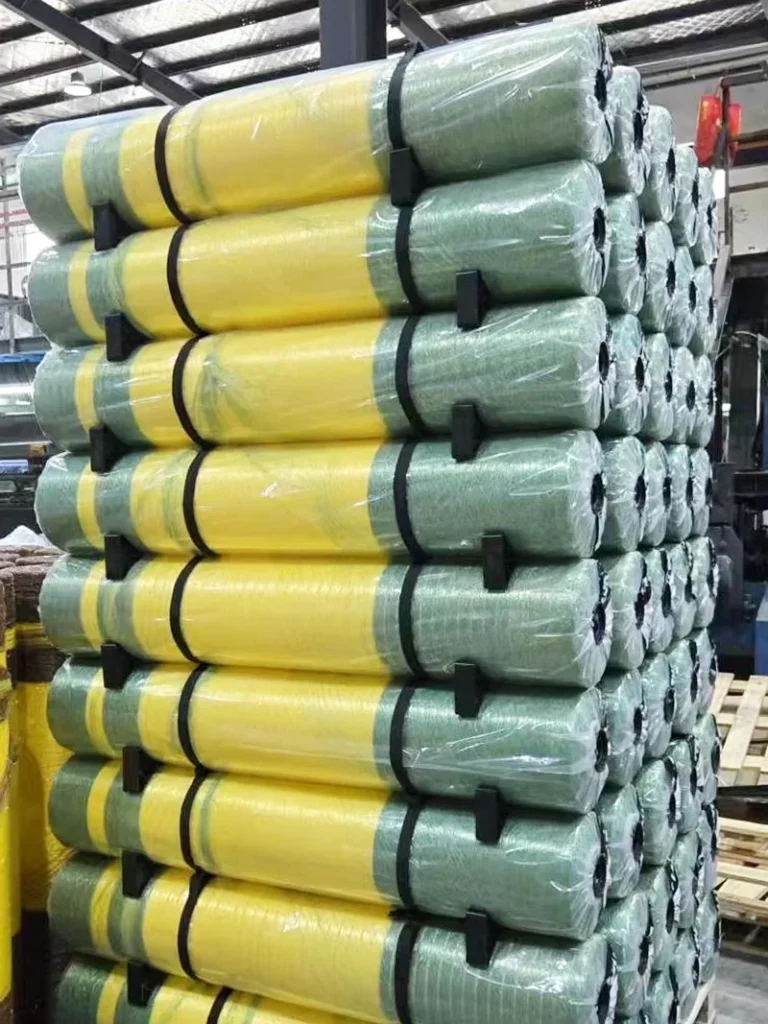
Not all net wrap performs equally in sub-zero conditions — and the quality of the net wrap you purchase has a direct bearing on how difficult or easy safe winter removal is going to be.
The Role of Virgin HDPE
Net wrap manufactured from 100% new (virgin) HDPE maintains more consistent material properties at low temperatures than net wrap produced from recycled or mixed feedstocks. Virgin HDPE has predictable molecular weight distribution and consistent crystallinity — factors that determine how the material behaves under tension at cold temperatures.
Net wrap with inconsistent raw material composition — common in lower-quality products — may have unpredictable brittleness in cold conditions, with some sections of the same roll remaining relatively pliable while others snap on contact.
UV Stabilizers and Cold-Weather Embrittlement
UV stabilizers added to HDPE net wrap protect the polymer from solar degradation during the baling season and outdoor storage period. A secondary benefit of quality UV stabilization is that it helps maintain polymer flexibility at low temperatures by slowing the oxidative degradation processes that contribute to cold-weather brittleness.
Net wrap that has degraded significantly through UV exposure during outdoor storage — due to inadequate UV stabilizer content in the original product — will be more brittle in cold conditions than freshly manufactured net wrap with full UV stabilizer loading.
Weave Density and Strand Thickness
Net wrap with a denser weave and more substantial individual strands holds together better under the tension of cold-weather removal. Lighter-weight net wrap (7 g/m²) is inherently more prone to fragmentation at cold temperatures than heavier products (9–12 g/m²). For operations in severe cold-climate regions where winter feeding of wrapped silage is routine, specifying a higher net weight — 9 or 10 g/m² — is a practical investment in safer winter removal.
What to Ask Your Supplier
When purchasing net wrap for an operation where cold-weather removal is a regular challenge, ask your supplier:
- Is the net wrap produced from 100% virgin HDPE?
- What UV stabilizer loading is used in the formulation?
- What net weight options are available?
- Has the product been used in cold-climate markets (Canada, Scandinavia, northern Europe)?
A manufacturer who can answer these questions with specifics — rather than general assurances — is demonstrating the product knowledge that comes from genuine manufacturing experience.
Equipment Investments That Help
Beyond technique and net wrap quality, certain equipment investments make cold-weather net wrap removal safer and more manageable as a routine operation:
Dedicated hook knives or net wrap cutters A quality hook knife with a replaceable blade, kept sharp, makes cleaner cuts in cold-brittle net wrap than a general-purpose utility knife. Keep dedicated net wrap cutting tools at the feed area, not in the equipment shed.
Heated gloves or liner gloves Cold hands mean reduced dexterity and tactile feedback during net wrap removal — making it harder to feel remaining strands on the bale face. Thin liner gloves under work gloves improve dexterity without sacrificing warmth.
Portable work light A battery-powered work light positioned at the bale processing area dramatically improves visibility of net wrap fragments on bale faces and processed forage in low-light winter conditions.
Net wrap collection bin with lid A covered bin placed within arm’s reach of the processing area ensures removed net wrap is immediately contained and cannot re-enter the feed stream through wind or accidental contact.
Bale warmer (for severe cold operations) Some northern operations have invested in simple bale warming infrastructure — essentially a covered, slightly heated staging bay where bales sit for a few hours before feeding. The capital investment is modest relative to the herd health risk it mitigates.
Emergency Protocol: Net Wrap Has Already Gone Into the Mixer
Despite best efforts, there will be occasions when net wrap contamination reaches the TMR mixer. Here is the emergency response:
Stop the mixer immediately if net wrap contamination is detected during or after loading. Do not continue mixing once contamination is suspected.
Do not feed the contaminated batch. Remove the TMR from the mixer. The net wrap fragments are now distributed through the entire batch and cannot be recovered.
Clean the mixer thoroughly before loading fresh TMR. Net wrap strands can wrap around mixer auger shafts and paddles and be gradually released into subsequent batches if not fully cleared.
Monitor the herd if contaminated TMR was fed before the contamination was detected. Keep an eye on feed intake and general condition over the following days, and consult your veterinarian if you have concerns about specific animals.
Trace the source — identify which bale or bales contributed the contamination, which net wrap roll they came from, and what conditions led to the contamination reaching the mixer. Document this for your incident log and supply chain review.
Changzhou Xinhui Netting Co., Ltd. — Net Wrap Built for Cold-Climate Operations
Changzhou Xinhui Netting Co., Ltd. is a professional net wrap manufacturer supplying farms and distributors worldwide, including cold-climate markets in Canada, northern Europe, and Japan.
Our net wrap is manufactured from 100% new (virgin) HDPE with UV stabilizers — the material foundation for consistent cold-weather performance. We offer heavier net weights specifically suited to operations where winter removal safety is a priority.
Specifications Relevant for Cold-Climate Operations
| Net Weight | Cold-Weather Suitability | Recommended For |
|---|---|---|
| 7 g/m² | Basic | Mild winters, quick feed-out |
| 8 g/m² | Standard | General cold-climate use |
| 9 g/m² | Good | Northern operations, silage bales |
| 10 g/m² | Better | Severe cold, extended outdoor storage |
| 12 g/m² | Best | Extreme conditions, maximum integrity |
Full Product Range
| Width | Length | Net Weight Options |
|---|---|---|
| 48″ (122 cm) | 3,000 m | 7 / 8 / 9 / 10 / 12 g/m² |
| 51″ (130 cm) | 3,000 m | 7 / 8 / 9 / 10 / 12 g/m² |
| 64″ (163 cm) | 2,134 m | 7 / 8 / 9 / 10 / 12 g/m² |
| 67″ (170 cm) | 2,134 m | 7 / 8 / 9 / 10 / 12 g/m² |
| 1.23 m | 2,000 m / 3,000 m | 7 / 8 / 9 / 10 / 12 g/m² |
| 1.25 m | 2,000 m / 3,000 m | 7 / 8 / 9 / 10 / 12 g/m² |
| 1.30 m | 3,600 m | 7 / 8 / 9 / 10 / 12 g/m² |
Bales per 3,000 m roll: 200–300 bales at 2.5–3.5 wraps per bale
Frequently Asked Questions
Q: Why does net wrap break into pieces in cold weather?
A: HDPE — the polymer all net wrap is made from — becomes progressively more brittle at sub-zero temperatures. At -10°C to -20°C and below, net wrap that would stretch and peel cleanly in warmer conditions instead snaps under tension. The combination of cold-induced brittleness and the ice bond that forms between the net and frozen silage makes cold-weather removal significantly more challenging than summer or fall removal.
Q: Is it harmful if my cows eat small amounts of net wrap?
A: HDPE net wrap fragments are non-digestible and do not pass through the rumen. They can accumulate in the forestomachs over time. Repeated ingestion across a feeding season may gradually affect rumen function and reduce feed intake and milk output — impacts that are easy to miss because they show up as slow, diffuse underperformance rather than obvious illness. The goal should be zero contamination of TMR with net wrap material, and achieving that through good winter removal technique is straightforward with the right approach.
Q: What is the most effective way to prevent frozen net wrap from fragmenting?
A: Pre-warming the bale before net wrap removal is the single most effective intervention. Even 2–4 hours in an above-freezing environment, or a light application of warm water to the bale surface, significantly reduces HDPE brittleness and softens the ice bond. Cutting the net wrap before pulling — rather than pulling directly — also dramatically reduces fragmentation compared to the common practice of simply grabbing and yanking.
Q: Does net wrap quality affect how it behaves in cold weather?
A: Yes, significantly. Net wrap manufactured from 100% virgin HDPE with adequate UV stabilization maintains more consistent material properties at low temperatures than lower-quality products. Heavier net weights (9–12 g/m²) are also more resistant to cold-weather fragmentation than lighter products. For northern operations where winter net wrap removal is routine, specifying a higher net weight from a quality manufacturer is a practical investment in herd health protection.
Q: Should I change my net wrap weight for silage bales that will be fed in winter?
A: For operations in severe cold-climate regions where winter silage feeding is routine, moving from 8 g/m² to 9 or 10 g/m² net wrap is worth considering. The heavier product is more resistant to cold-weather fragmentation, provides better bale integrity through outdoor storage, and — because the strands are more substantial — is easier to inspect and confirm complete removal before the bale enters the processor.
Q: What should I do if I discover net wrap has already been mixed into a TMR batch?
A: Stop the mixer immediately and do not feed the contaminated batch. Remove and discard the TMR, clean the mixer thoroughly to remove any strands wrapped around auger components. Monitor your herd’s feed intake and condition over the following days, and contact your veterinarian if you have concerns about specific animals.
Q: Can a bale processor remove net wrap automatically?
A: Some bale processors are designed to separate net wrap from forage during processing, but none guarantee 100% net wrap removal — particularly in cold conditions where fragmented net wrap is mixed into the outer forage layers. Manual net wrap removal before bale processing remains essential. The processor is a secondary safety stage, not a substitute for clean manual removal.
Conclusion: Cold Weather Demands a Cold-Weather Protocol
The frozen silage net wrap problem is not going to solve itself, and “being careful” is not a protocol. It is a wish. What protects your herd — and your TMR — is a systematic, step-by-step approach that addresses the problem at every stage: pre-warming, careful cutting and peeling technique, bale face inspection, processor management, and mixer pre-load checking.
Combine that protocol with net wrap specified for cold-climate performance — heavier weight, 100% virgin HDPE, adequate UV stabilization — and you have a genuine system for eliminating plastic contamination from your winter TMR rather than just hoping for the best.
Changzhou Xinhui Netting Co., Ltd. manufactures net wrap in the weights and specifications that support safe winter removal — factory-direct, to farms and distributors in cold-climate markets worldwide. If your current net wrap is making winter removal harder than it needs to be, contact us to discuss specifications that work better for your conditions.
Contact Changzhou Xinhui Netting Co., Ltd.
Changzhou Xinhui Netting Co., Ltd. Professional Net Wrap Manufacturer | OEM & Private Label | Factory Direct Pricing
📧 : sale1@xinhuibalenetwrap.com
🌐 : https://xinhuibalenetwrap.com
Request a Free Quote Today →
Supplying farms, co-operatives, and distributors across North America, Europe, Japan, Australia, and worldwide.


