
Can You Use Net Wrap for Silage? Understanding the “Oxygen Barrier” Myth
Introduction
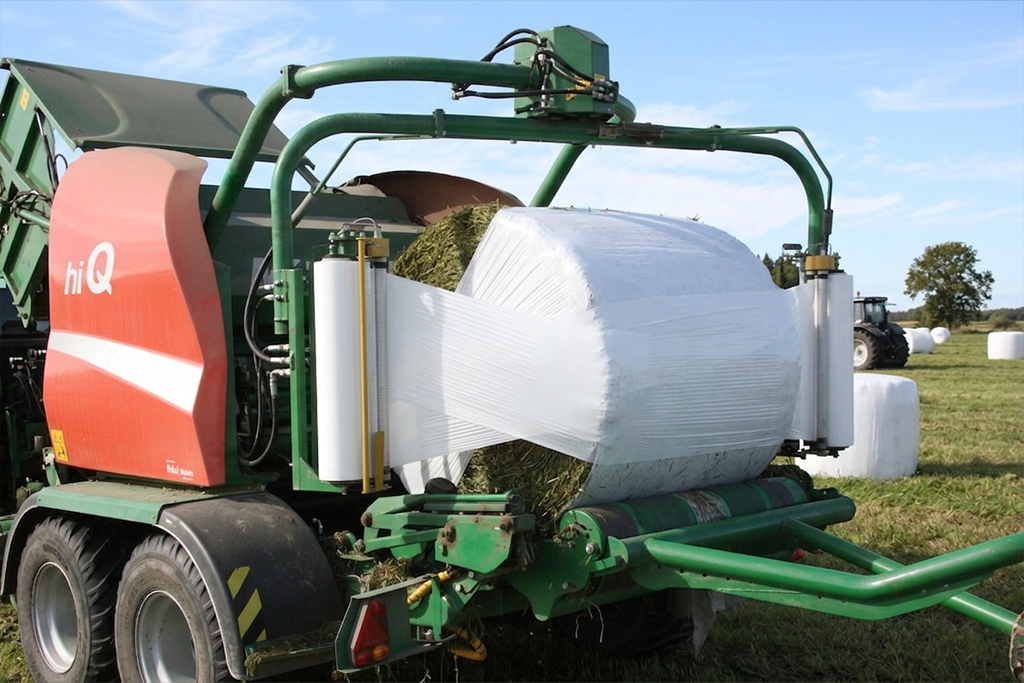
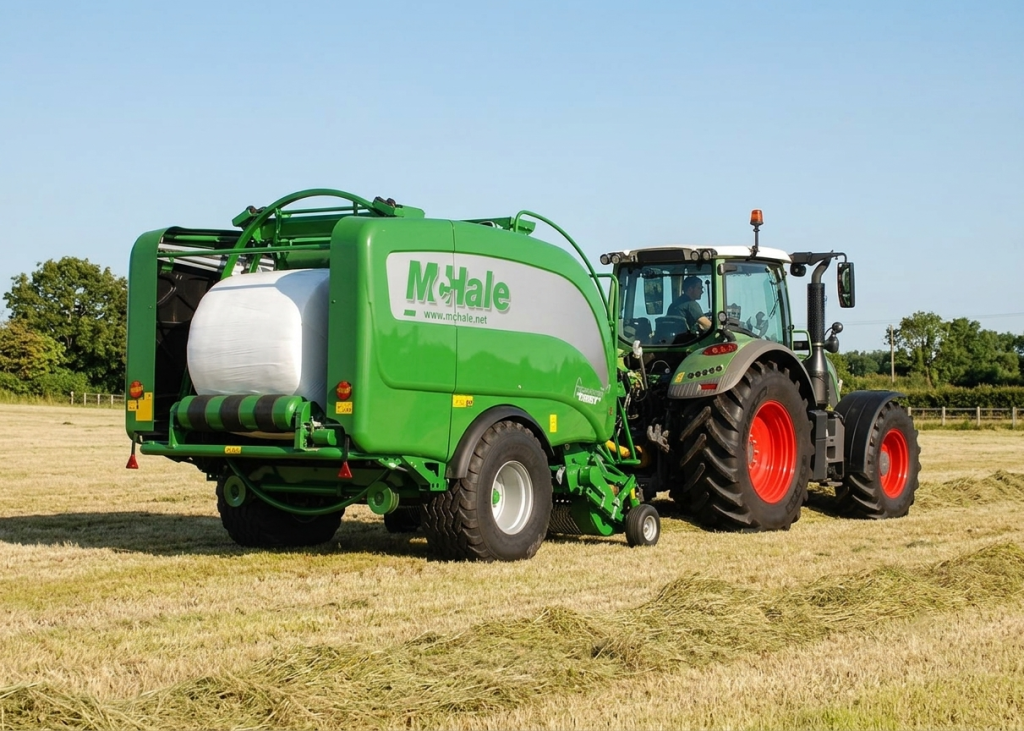
Can you use net wrap for silage? Yes. Bale net wrap is commonly used when forming round bales for baled silage, also known as baleage. However, net wrap and silage stretch film perform two different functions. Net wrap holds the forage together and helps maintain a uniform bale shape, while the outer plastic film provides the main barrier against oxygen entering the bale during storage.
Confusing these functions can lead to poor wrapping decisions, damaged film, and unnecessary forage losses. Bale net wrap is a bale-forming and support material, not a substitute for oxygen-barrier film.
For farmers, agricultural contractors, and forage distributors, understanding this distinction is essential when choosing net wrap for silage bales. The correct combination of bale density, net coverage, film application, and storage management helps preserve feed quality throughout the storage period.
What Is Bale Net Wrap for Silage?
Bale net wrap is a high-strength mesh material applied around a compressed round bale by a round baler. It holds the crop in place after baling and helps the bale retain its shape during unloading, handling, transport, and storage.
When producing baled silage, net wrap is typically applied before the bale enters a separate wrapping machine or an integrated baling-and-wrapping system.
The net wrap helps to:
- Hold forage securely in a compact round bale.
- Maintain a consistent shape during handling.
- Support the curved surface and edges of the bale.
- Reduce deformation that could interfere with uniform stretch-film application.
- Help prevent crop stems from protruding and puncturing the outer film.
Net wrap does not create an airtight seal. Its mesh structure allows air to pass through, so it cannot independently establish the oxygen-limited environment required for successful silage fermentation and preservation.
Does Net Wrap Block Oxygen in Silage Bales?
No. Conventional bale net wrap is not an oxygen barrier.
Net wrap is designed to secure forage mechanically, not to seal a bale against air. Oxygen can pass through the openings in the mesh and between the strands. Even a tightly formed net-wrapped bale remains exposed to air unless an appropriate external wrapping system is applied.
Silage preservation depends on restricting oxygen after baling. When oxygen remains available, aerobic microorganisms can consume nutrients and contribute to heating, mold development, and spoilage.
For wrapped round-bale silage, the outer stretch film performs the primary oxygen-control function. The film must be applied correctly, with sufficient layers and suitable overlap, and remain intact throughout storage.
This distinction is the key to understanding the so-called “oxygen barrier” myth: net wrap supports the bale, while silage stretch film seals it.
Net Wrap vs. Silage Stretch Film: What Is the Difference?
Although both materials are used in baled silage production, they have different structures and responsibilities.
| Feature | Bale Net Wrap | Silage Stretch Film |
|---|---|---|
| Main function | Holds the bale together | Restricts oxygen entry |
| Typical structure | Open mesh | Continuous plastic film |
| Air permeability | Air passes through the mesh | Designed for low oxygen permeability |
| Main application stage | During baling | After baling |
| Bale shape support | Helps maintain bale integrity | Follows and protects the bale surface |
| Protection against punctures | Helps contain the crop and support the bale | Can be punctured by sharp stems or damaged during handling |
| Can it replace the other material? | No | No; it does not replace the net wrap’s bale-forming function in conventional systems |
The two materials work together. A well-formed bale gives the stretch film a more uniform surface, while properly applied film protects the forage from oxygen exposure.
Why Net Wrap Still Matters When Making Silage
If net wrap cannot block oxygen, why use it for silage at all? The answer lies in bale structure and the performance of the complete wrapping system.
1. It Helps Maintain a Uniform Bale Shape
A consistent bale shape makes it easier for stretch film to cover the entire surface. Uneven shoulders, loose edges, and excessive deformation can create areas where film coverage is less consistent.
Tama’s technical guidance also emphasizes the importance of full-width net coverage and well-shaped bales when preparing round-bale silage.
2. It Supports Film Protection
Forage stems can protrude from the surface of a poorly formed bale. These stems may puncture or damage the film during application, handling, or storage.
Proper net coverage helps keep the crop contained and supports a smoother bale surface. It cannot guarantee that film punctures will not occur, but it helps reduce problems associated with poorly secured forage.
3. It Improves Handling Efficiency
Net-wrapped bales are generally easier to handle as a compact unit. Maintaining bale integrity during ejection, loading, transport, and wrapping can help reduce deformation and make the wrapping process more consistent.
4. It Supports More Consistent Film Application
A round bale with firm, even edges is easier to wrap uniformly. This is particularly important for individual bale wrappers and inline wrapping systems, where bale shape affects film overlap and the formation of joints between adjacent bales.
How Many Layers of Silage Film Are Needed?
The required number of stretch-film layers depends on the film specification, storage duration, crop conditions, wrapper setup, and the recommendations for the particular wrapping system.
University extension guidance commonly recommends four to six layers for wrapped baleage, with six layers often advised for better oxygen exclusion and protection. Some guidance allows fewer layers for short-term storage under specified conditions, but this should not be treated as a universal recommendation.
For example, the University of Georgia Extension recommends six layers for adequate oxygen exclusion in its baleage guidance, while noting that four layers may be adequate for short-term storage in certain circumstances.
| Factor | Practical Guidance |
|---|---|
| Stretch-film layers | Four to six layers are commonly discussed in extension guidance; follow local recommendations and film specifications |
| Film overlap | A 50% overlap is commonly used with suitable wrapper settings |
| Film stretch | Follow the film and wrapper manufacturer’s specified pre-stretch range |
| Bale shape | Form uniform bales with firm, well-defined edges |
| Film condition | Inspect for punctures, tears, loose layers, and damaged joints |
| Storage period | Longer storage increases the importance of maintaining film integrity |
These values are practical reference points, not a substitute for the operating instructions for a specific wrapper and film product. Film thickness, formulation, pre-stretch, and wrapper design can affect the appropriate settings.
How to Use Bale Net Wrap Correctly for Silage
A reliable baleage process involves several stages. Each stage contributes to the quality of the finished bale.
Step 1: Prepare the Crop Correctly
Harvest the forage at the appropriate maturity and moisture content for the crop and intended preservation method. Soil contamination, unsuitable moisture, and poor crop condition can compromise silage quality even when wrapping is performed correctly.
Step 2: Form a Dense, Uniform Bale
Operate the baler to produce a firm bale with a consistent shape. Avoid uneven shoulders or loose edges that may complicate film coverage.
Step 3: Apply the Correct Net Wrap
Use net wrap compatible with the baler and suitable for the crop. Follow the baler manufacturer’s instructions for net width, loading, tension, and the required number of wraps.
Full-width coverage is particularly important because exposed or poorly supported edges can affect bale shape and the subsequent wrapping process.
Step 4: Transfer the Bale Carefully
Avoid unnecessary impacts, dragging, or handling that could deform the bale or damage the net. Follow the wrapper manufacturer’s procedures for loading and positioning.
Step 5: Apply Silage Stretch Film Promptly
Use a suitable silage stretch film and apply the recommended number of layers, overlap, and stretch. Ensure that the film covers the bale consistently, including its curved surface and ends.
Step 6: Inspect and Protect the Finished Bale
Check for holes, tears, loose film, and exposed areas. Repair film damage promptly using an appropriate repair product. Store bales where the risk of punctures from machinery, animals, birds, or sharp objects is minimized.
What Happens If You Use Net Wrap Without Silage Film?
Using conventional net wrap alone is not an appropriate method for preserving wrapped bale silage.
Without a suitable external barrier, the bale remains exposed to oxygen. This can interfere with anaerobic fermentation and increase the risk of heating, mold, nutrient loss, and spoilage.
Net-wrapped dry hay and net-wrapped silage are therefore not interchangeable storage systems. Dry hay is preserved primarily by reducing moisture to a suitable level. Silage relies on controlled fermentation under oxygen-limited conditions.
The correct preservation method depends on the crop moisture, intended storage system, and feeding requirements.
Common Silage Wrapping Problems and Their Causes
| Problem | Possible Cause | Recommended Action |
|---|---|---|
| Film punctures | Protruding stems, rough bale surfaces, or handling damage | Improve bale formation and inspect film after wrapping |
| Loose film layers | Incorrect tension, overlap, or wrapper settings | Check wrapper calibration and film instructions |
| Uneven coverage | Irregular bale shape or inconsistent wrapping | Form uniform bales and check film distribution |
| Mold or heating | Oxygen entry, poor fermentation, unsuitable moisture, or damaged film | Review harvest conditions, film integrity, and storage practices |
| Deformed bales | Insufficient bale integrity or unsuitable handling | Check net coverage, bale density, and transfer procedures |
Not every silage problem is caused by net wrap or film. Crop maturity, moisture content, contamination, fermentation conditions, and storage management must also be considered.

Choosing Bale Net Wrap for Silage Applications
When selecting bale net wrap for silage production, buyers should evaluate more than the price per roll.
Important purchasing considerations include:
- Baler compatibility: Confirm the required roll width, core dimensions, and feed direction.
- Coverage: Check that the net provides appropriate coverage across the bale width, including the edges.
- Tensile performance: Request technical data or test results relevant to the intended baling conditions.
- Feeding and cutting performance: Confirm that the net feeds consistently and cuts cleanly in the intended baler.
- Roll length and yield: Compare expected bales per roll using the actual bale diameter and net-wrap settings.
- Supplier consistency: Check production quality, packaging, and the availability of repeat orders.
For silage applications, reliable net coverage and consistent bale formation are particularly important because the quality of the finished bale affects the performance of the outer film.
Frequently Asked Questions
Can you use net wrap for silage?
Yes. Bale net wrap is commonly used to hold round bales together before they are wrapped with silage stretch film. Net wrap supports bale structure but does not replace the oxygen barrier provided by the outer film.
Does bale net wrap prevent oxygen from entering a silage bale?
No. Conventional net wrap has an open mesh structure that allows air to pass through. Oxygen control depends primarily on suitable silage film, correct application, adequate coverage, and maintaining film integrity during storage.
Is net wrap better than twine for silage bales?
Net wrap can provide broader surface coverage and help maintain a more uniform bale shape compared with conventional twine. This can support more consistent stretch-film application. The best choice depends on the baler, crop, operating conditions, and manufacturer recommendations.
How many layers of plastic film should be used for baleage?
Four to six layers are commonly referenced in extension guidance, with six layers often recommended for better protection. The correct number depends on the film, storage duration, crop conditions, and local recommendations. Always follow the film and wrapper manufacturer’s instructions.
Can silage be stored with net wrap only?
Conventional net wrap alone is not suitable for preserving wrapped bale silage. Without an appropriate oxygen barrier, the forage remains exposed to air and the risk of spoilage increases.
Why is edge-to-edge net wrap important for silage?
Full-width net coverage helps support the bale edges and maintain a uniform shape. A well-formed bale can make it easier to apply stretch film consistently and reduce the risk of uneven coverage.
Can net wrap damage silage stretch film?
Net wrap itself is intended to remain beneath the outer film, but protruding crop material, poor bale formation, or an irregular surface can contribute to film punctures. Proper baling, net coverage, and careful handling help reduce this risk.
Conclusion
Bale net wrap plays an important role in modern silage production, but its function is often misunderstood. It secures the forage, supports bale shape, and helps prepare the bale for consistent stretch-film application. It does not act as an oxygen barrier.
Successful baled silage production depends on the entire preservation system: suitable crop conditions, uniform bale formation, reliable net coverage, correctly applied silage stretch film, and careful storage management.
For farmers and agricultural contractors, selecting the right bale net wrap for silage means choosing a product that performs reliably in the baler and supports the quality of the finished bale. Net wrap and stretch film should be treated as complementary materials, each performing a distinct and essential role.


